

A small analog paradise in Tokyo: KUNG FU CAMERA by HIRO KODAMA
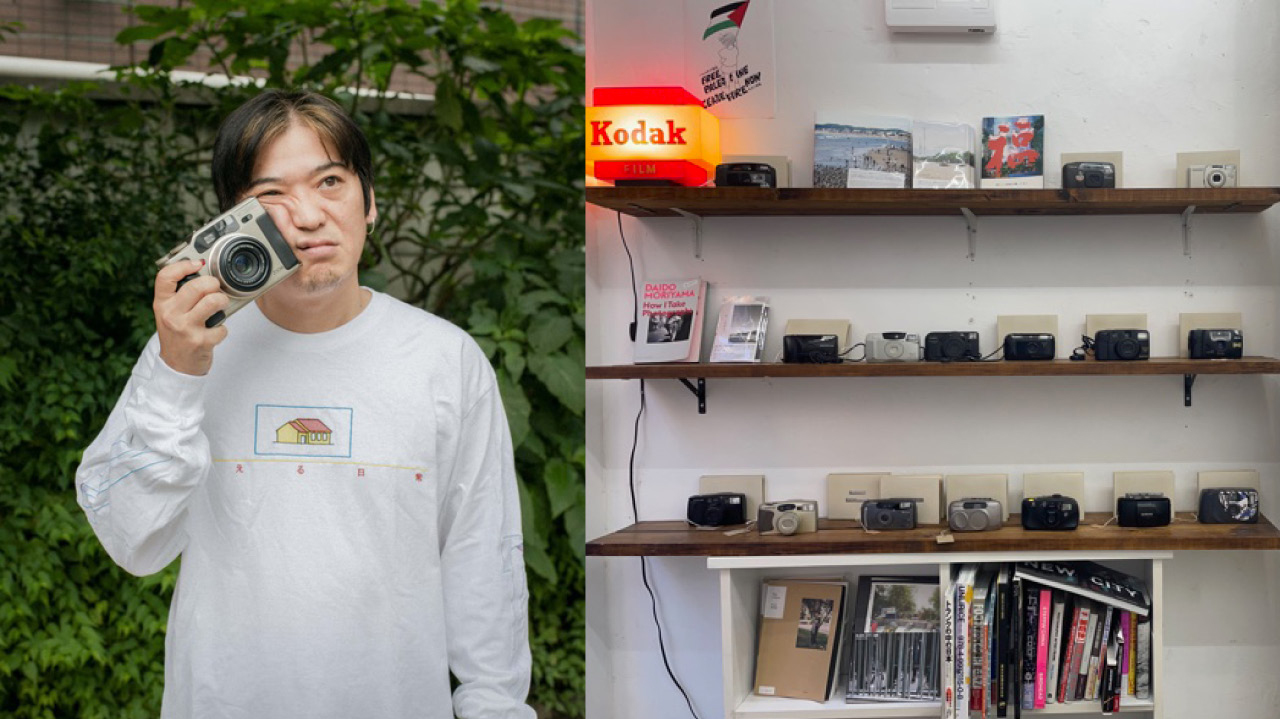
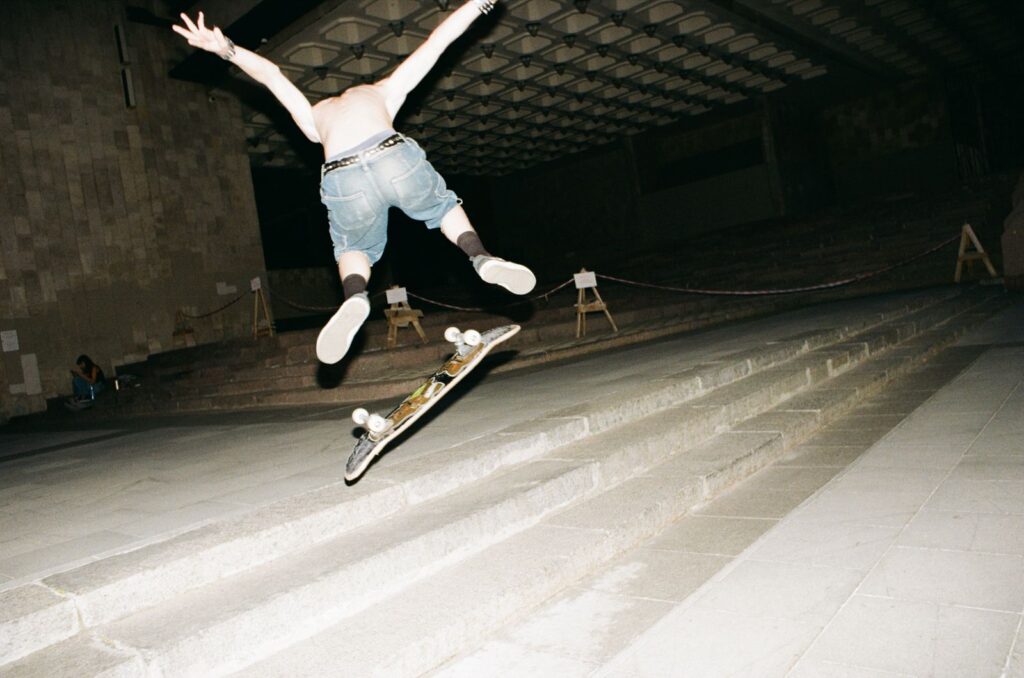
Tokyo, home to many of the brands that have shaped the history of photography, is still a place where the analog side of the craft continues to thrive. The small shop Kungfu Camera in the Koenji neighborhood, owned by Hiro Kodama, stand as a testament to this spirit, and is an essential stop to visit in Tokyo for anyone into film photography. Beyond his Kungfu Camera shop fully devoted to analog photography, Kodama has also made a name for himself with his photography series focusing on lives shaped by war and unrest. His work, Notes In Ukraine, portrays young Ukrainians seeking refuge in skateboarding during wartime.
“The most important thing in photography has taught me is to remain fair—toward the people and landscapes I photograph, and at the same time, toward myself.”
How did your interest and passion for photography begin?
I was born in a very small rural town in western Japan. There was a small public library there. It didn’t have many books, but for me as a child, it was an important place. I wasn’t very good at reading long texts, so I would often flip through insect encyclopaedias or look at photo books.
Most of the photo books on the shelves were local landscape photography. There weren’t many different kinds, but among them were a few books by photographers from Magnum Photos, and I was deeply drawn to them. I would look at the same photographs again and again, imagining the world inside them and letting my thoughts expand.
At that time, I was still a teenager, and I didn’t really understand history or the world in a deep way. Even so, I felt a pure sense of happiness in being able to see distant places and moments, across time and space, through photographs, while sitting in that small rural town.
Later, I left my hometown and began working as a news cameraman for a television station. I carried a large video camera on my shoulder and travelled all over Japan. Many of the places I visited were crime scenes, or sites of disasters such as earthquakes and floods.
News and documentaries, by nature of being broadcast on television, are often seen only once. After a broadcast ends, the next day you go to a new location and start from zero again. In a sense, forgetting yesterday was necessary. I was also drawn to that fragility and transience.
Gradually, however, I began to feel that I wanted to create something that didn’t exist only inside television—something you could hold in your hands, return to whenever you wanted, and experience at your own pace, under your own control. That was when I remembered the photographs I had encountered in the library as a teenager.
That is how I began to record the world through photography. For me, it started with street photography. On my days off, I travelled abroad, walked through cities, and photographed landscapes and everyday life. When I had the chance, I showed my work to photographers I respected and asked for their opinions and advice. Through this accumulation, my passion for photography slowly deepened.
What has photography taught you in life?
The most important thing photography has taught me is to remain fair—toward the people and landscapes I photograph, and at the same time, toward myself. I believe this is important not only in photography, but in life itself.
I place great importance on dialogue in photography. During shooting, there is dialogue with the subject. Afterward, when I look back at the photographs, a dialogue with myself begins. Photography is not an act of taking something one-sidedly; I see it as a constant back-and-forth movement.
Another important lesson is to be as honest as possible with my own curiosity. Ambitions such as wanting to make money or become famous are easily seen through by people and places. I feel that such motives ultimately damage oneself.
What matters most is having pure curiosity and genuinely loving what you are doing. That attitude, I believe, is the most important thing — both in photography and in life.
For me, a camera is simply a tool for communication. What kind of expensive camera you use is not very important to me.
How do you observe the interest towards analogue photography among younger generations in Japan?
I think it is truly wonderful that social media has become a platform where anyone can present their work. You can publish your work to the world, anytime you want, completely on your own. In other words, people around the world now have the right to publish a book. There has never been such a major change before.
Of course, there is also the sadness that images are instantly scrolled past. Taking time to look at a single photograph and think about it has become a rare experience.
Still, I believe that more and more outstanding photographers will emerge from social media. This is not just a trend; it is a social experiment that questions what photography is and how it should be seen.
Japan has a very strong publishing culture, ranging from major publishers to independently made zines. This is a wonderful aspect of Japanese culture that values tradition, but at the same time, it can sometimes act as an obstacle to social innovation.
That is why I am excited to see more innovative forms of photography and new modes of expression appear in the future.
“My projects are very inefficient. There is a lot of waste, and sometimes real danger. But I am not interested in a kind of journalism that demands quick answers. I am not trying to present clear conclusions.”
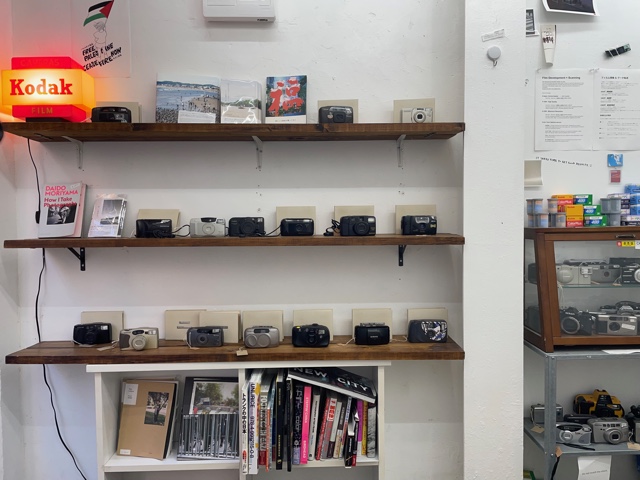
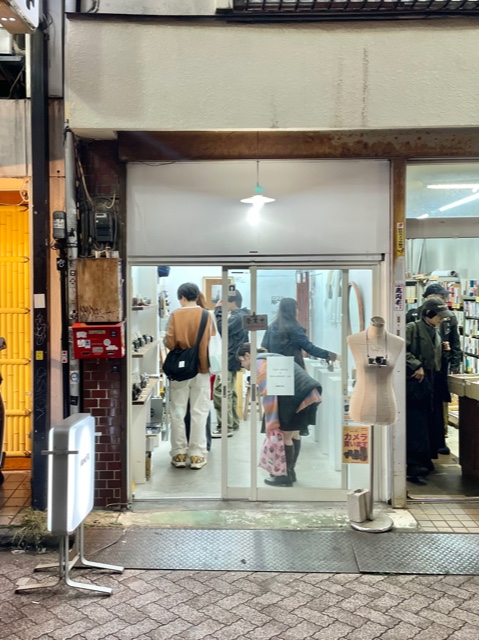
What is the story of your store Kungfu Camera? What does Kungfu Camera represent?
After leaving the television station, I rented a small office for photography and video work for a while. This was about ten years ago.
One day, a friend from Hong Kong told me, “If you love photography, you should sell cameras. Film cameras are popular among young people in Hong Kong right now. It will happen in Japan soon too, so do it quickly—hurry, hurry!” I was sceptical. To be honest, it sounded like a hassle. So, at first, I simply placed five compact cameras I already owned by the window of my office. Just five. There were no price tags.
After a while, a young person came by and asked, Are these for sale? I’d like to buy one.” I was genuinely surprised. After many twists and turns, that moment eventually led to what Kungfu Camera is today.
Kungfu Camera aims to be the first place where young people encounter film cameras. In Japan, there are many excellent shops that deal in antique and vintage cameras, but most of them are oriented toward collectors and can feel intimidating for beginners. I myself was once scolded by a shop owner for lacking knowledge when I was a student.
What matters most at Kungfu Camera is communication. This is something it shares with my photographic approach. First comes conversation—casual talk, jokes—and answering any questions without judgment. Everyone is welcome.
Most of the cameras we sell are affordable and beginner-friendly, including many easy-to-use compact cameras. Rather than focusing on equipment, we want people to discover the joy of taking photographs. That idea is at the core of Kungfu Camera.
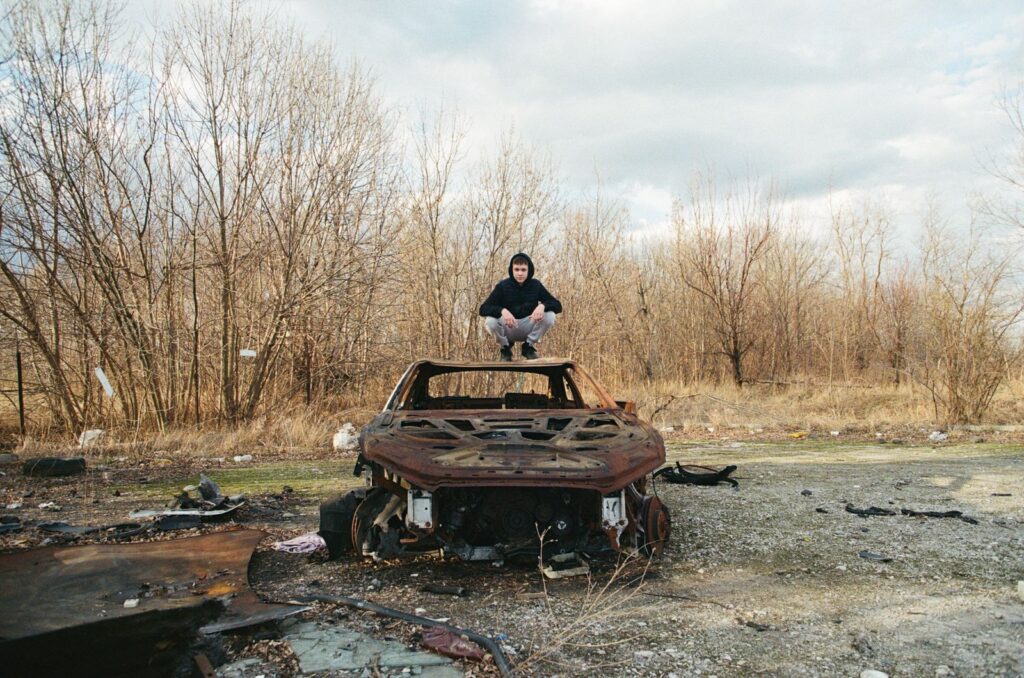
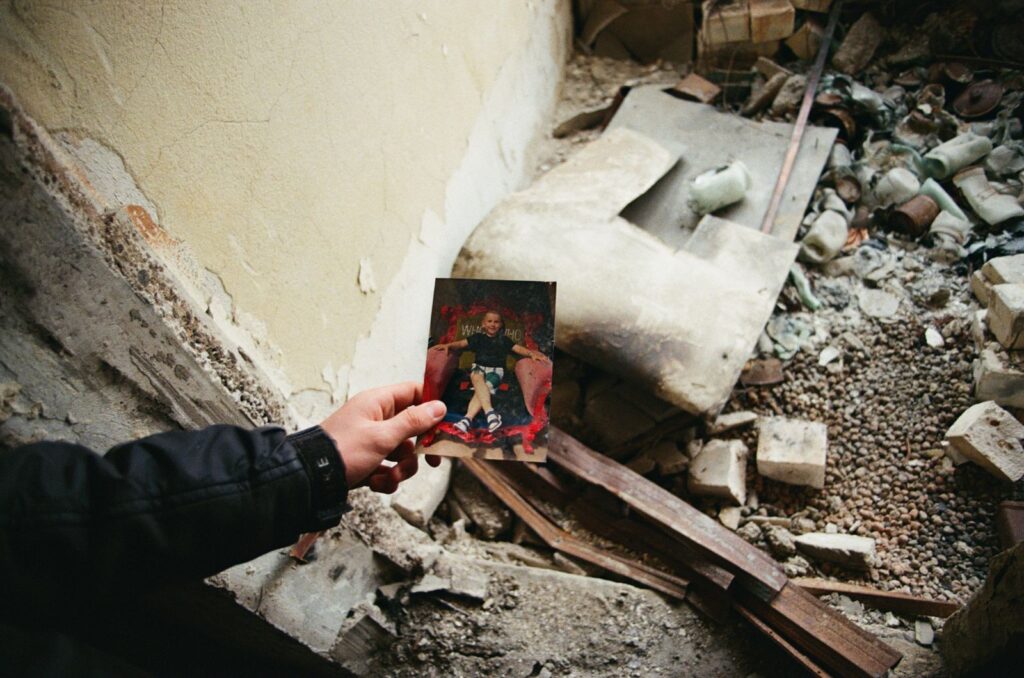
Can you tell us about your motivations behind your projects New City, Block City, Notes in Ukraine, and doing work in war zones?
In general, journalism tends to converge toward similar perspectives. However, even in the most extreme situations, there are always people there, each thinking, hesitating, and living their lives. I want to enter those places and communities alone and place myself inside them.
Rather than observing from the outside, I move in and out of people’s lives, sometimes taking distance, sometimes touching objects, sometimes stepping back to look at the whole situation. I listen to local people, and sometimes I do things together with them. I value these shifting perspectives, moments of surprise, and uncertainty on site.
My projects are very inefficient. There is a lot of waste, and sometimes real danger. But I am not interested in a kind of journalism that demands quick answers. I am not trying to present clear conclusions.
I am always struggling with questions. But instead of worrying pessimistically while staring at a smartphone screen, I want to go to the place itself, put my body there, and struggle there. I want to leave fragments of the thoughts and sensations that emerge through that process in the form of photographs.
Things HIRO KODAMA loves and hates about TOKYO
There are many wonderful things about Tokyo, but I don’t often go to places like Shinjuku or Shibuya. I have no interest in flashy, wealthy lifestyles, constantly meeting new people, or endless nights of parties.
I also dislike crowded trains, so I do almost everything by bicycle. I live within a range where all my daily needs can be handled that way. I visit the same shops, greet my neighbours. What I love about Tokyo is that even within this massive city, you can recreate a lifestyle that feels almost rural.
What I dislike is the overall mood of the city. Life in Tokyo is supported by many foreign workers, yet their presence is largely invisible. It sometimes feels as though they are intentionally separated from and hidden within our daily lives.
Who makes the food we casually eat from convenience stores? Who cleans our clothes when we send them to the cleaners? Who is actually working at construction sites across the city?
In Japan today, including Tokyo, conservative ideas that exclude foreign workers are growing stronger, intertwined with political issues. I strongly dislike this atmosphere. I hope Tokyo can remain to be the most free city in Japan.
Some areas in TOKYO that are usually overlooked by travelers but shouldn’t, according to HIRO KODAMA
Wherever I go in the world, I always visit areas outside the city center—the suburbs. The city center is the “front stage,” a dressed-up public face. Shibuya crossings, skyscrapers, famous restaurants, grand temples. Unfortunately, everywhere you go, you see the same kinds of tourists. It feels like places prepared to say, “Take your photo here.”
In the suburbs, however, the real face of the city begins to appear. That is what I truly love.
It doesn’t matter where you go. Just take a random train, get off at a random station, and walk. Endless rows of detached houses, huge roadside shopping malls, used-car dealerships, small vegetable plots tucked between homes. Children playing soccer, women walking home from the supermarket, wide skies and sunset light, local people walking their dogs along the river.
If you are tired of the noise of the city, I strongly recommend visiting Tokyo’s suburbs. You will have a quiet, slightly strange experience. The landscapes you see there, and the experiences you have, are also unquestionably part of Tokyo.