

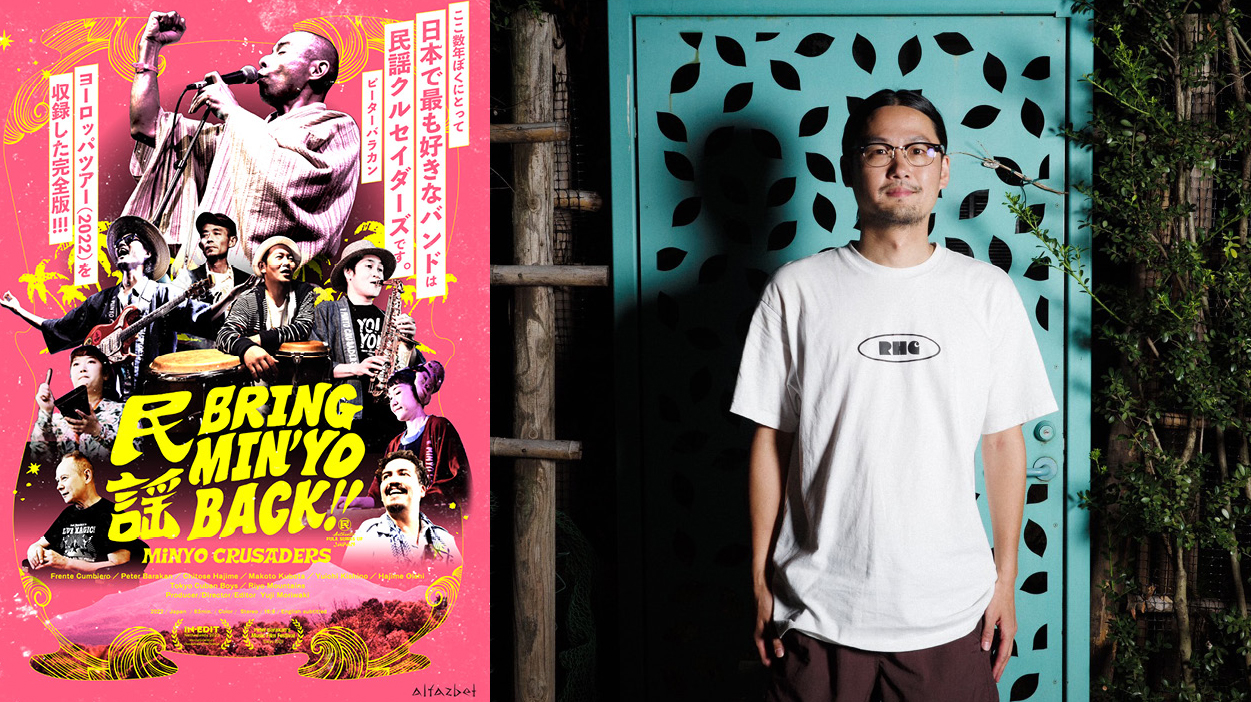
Hearing the roots again: YUJI MORIWAKI
Although Japan’s traditional folk music minyowas long regarded as something belonging to the past, in recent years it has been reshaped in the hands of a new generation. Bring Minyo Back follows Minyo Crusaders—right at the center of this transformation—to explore how music can transcend borders, how the local can evolve into a global language, and how the relationships with cultural roots can be redefined. Spanning six years, the documentary travels from Tokyo to the ritualistic dances of Gujo and the DIY scene of Bogotá, reminding that minyo is not just a musical genre but a living culture. We spoke with the film’s director, Yuji Moriwaki, about the origins of this journey, its turning points, and what minyo means today.
“I would be happy if this film encourages viewers to think about their own roots and traditional music.”
How did you start the Bring Minyo Back project? What was the driving force for you in this story?
I usually work in video production, but I had long wanted to create a personal project centered on music. In 2017, I went to see a live performance by Minyo Crusaders, who were starting to attract attention among a small circle of music fans at the time. I was deeply impressed, and right after the show I approached them about filming. At that point, I didn’t yet know whether it would become a full film, but I had a strong feeling that following this band would lead to something interesting.
What fascinated me was the way they were updating minyo, Japan’s traditional folk music, into a new form. Like many people in Japan, I mainly listened to Western music and knew very little about minyo—it felt like music of the “past.” (The situation is somewhat different with Okinawan folk music.) In reality, the minyo scene has been steadily shrinking and is now largely sustained by a small number of musicians who place great importance on preserving traditional forms.
The documentary sees the band recording, playing live, touring in Europe and recording in South America. A long journey! How long did it take to finish the documentary, and what moments are the highlights for you?
In the end, it took six years to complete the film. Just as the band was gaining momentum and starting to tour internationally, the pandemic hit, severely restricting live performances. During that period, I focused on filming online content for the band and conducting interviews with experts to deepen my understanding of minyo.
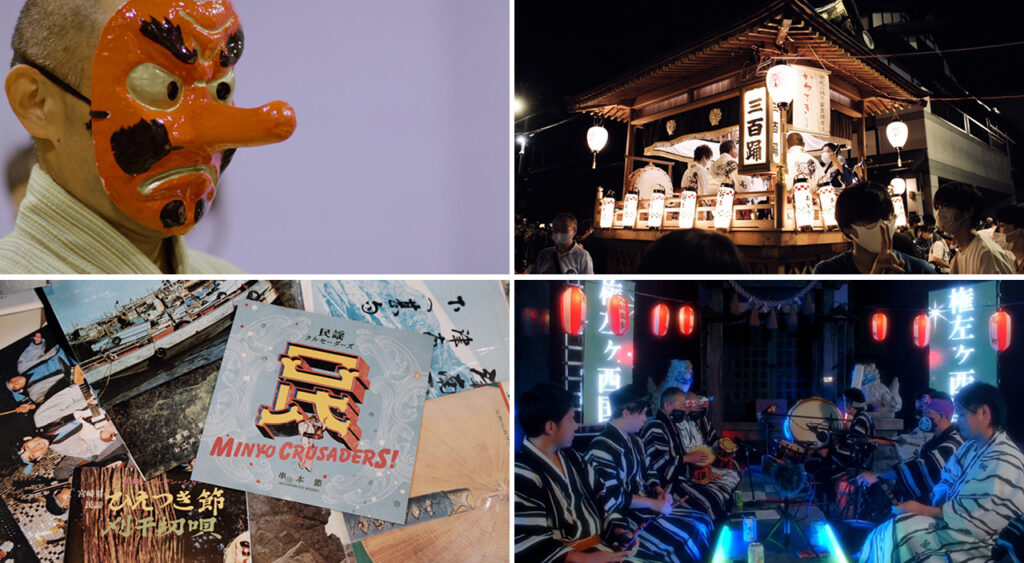
There are two major highlights for me. The first highlight is the Gujo Odori scene, a traditional dance festival held in the city of Gujo, Gifu Prefecture. Gujo Odori is a form of Bon Odori, a Japanese communal dance performed during O-Bon (mid-August), a period dedicated to welcoming the spirits of ancestors. It was held for the first time in four years after the pandemic. The festival is famous for people dancing continuously through the night for three days straight—it’s almost a ritualistic celebration. Bon Odori is a form of minyo, sung from a raised platform (Yagura) with people dancing in a circle around it. It is traditionally held around August 15 and is said to have originated as a ritual to welcome ancestral spirits. Gujo Odori is one of Japan’s three major Bon dances, and I was overwhelmed by the sight of people dancing wildly through the beautiful town, accompanied by the rhythmic sound of wooden clogs. The festival was mentioned in interviews in the film, so actually going there and filming it helped strengthen the story.
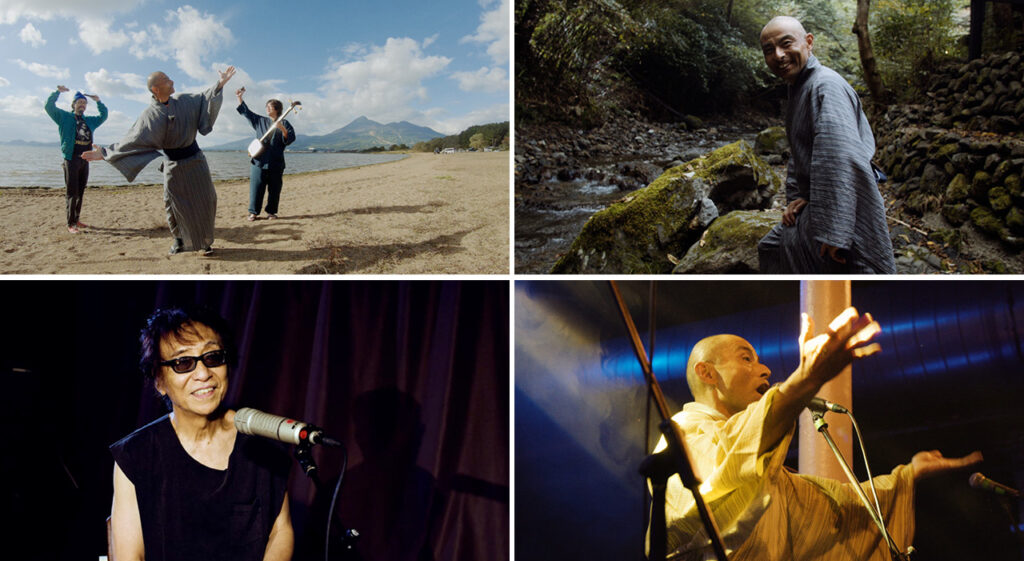
The second highlight is the trip to Colombia in South America. We stayed in Bogotá for two weeks to perform live and record music. It was the first trip to South America for all the band members, and the excitement was intense—especially recording with the highly respected Frente Cumbiero.
The DIY spirit of Bogotá’s artists and musicians was incredibly inspiring. Frente Cumbiero’s approach to cumbia closely resembles Minyo Crusaders’ approach to minyo, and the recording sessions were carried out with tremendous focus. Capturing the moment when music transcended national borders gave the film both breadth and intensity. Without this scene, it would have been very difficult to bring the documentary together as a whole.
What message did you imagine the documentary would convey to the audience, and what kind of feelings did you hope it would leave them with?
I hope audiences feel positive vibes. Since around the year 2000, in this era of globalization, there has been a global movement to redefine local root music—cumbia in South America, molam in Thailand, and surely similar movements in Turkey as well. I would be happy if this film encourages viewers to think about their own roots and traditional music.
Can you go into more detail in terms of what minyo means to you personally? And do you think minyo is finally back?
For me, minyo used to feel uncool. But as I researched it for the film, I began to understand the musical strength that comes from being passed down continuously over generations. There are still many deep and mysterious aspects to it. I also realized that minyo sounds completely different when experienced in real-life settings such as festivals compared to listening to recordings on CDs or records.
It is a significant step that minyo has been recognized within the field of pop music through Minyo Crusaders, but in Japan it is still not music that many people listen to regularly. Personally, I think it would be interesting if minyo were to merge with hip-hop among younger generations.
What other projects are you working on?
I am currently filming a band called Remon Nakanishi and Suzumeno Tears, who are updating minyo through a different approach from Minyo Crusaders. I am also continuing to follow Freddy, the vocalist of Minyo Crusaders, and would like to focus more on his activities outside the band as well.

TEENAGE KICKS: YUJI MORIWAKI’s early influences in JAPAN
Filmmakers: Shuji Terayama, Juzo Itami, Tatsuya Mori, Makoto Sato
Artists: Hiroshi Sugimoto, Kageo Miura (my grandfather)
Music: Boredoms, Fishmans, Cornelius, Denki Groove, Ryoji Ikeda
Writers: Joichi Miyamoto, Hideyuki Takano, Kyohei Sakaguchi
Something about TOKYO that still remains a mystery to YUJI MORIWAKI
I live in the western part of Tokyo. In contrast, the eastern area—often called shitamachi—retains older histories and festivals. I would love to visit some of the deep, lesser-known local festivals that you only learn about by actually living there.
Some neighborhoods and spots in TOKYO that travelers usually miss, but shouldn’t, according to YUJI MORIWAKI
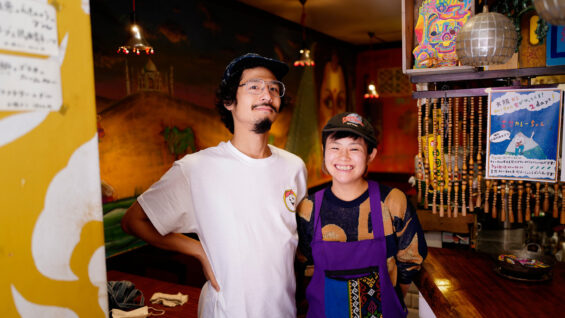
I live in the Shimokitazawa area. It has long been known as a culturally rich neighborhood, and I especially recommend a café called Jazz Kissa Masako, run by Moe, who used to play keyboards in Minyo Crusaders. There is also a second location.