
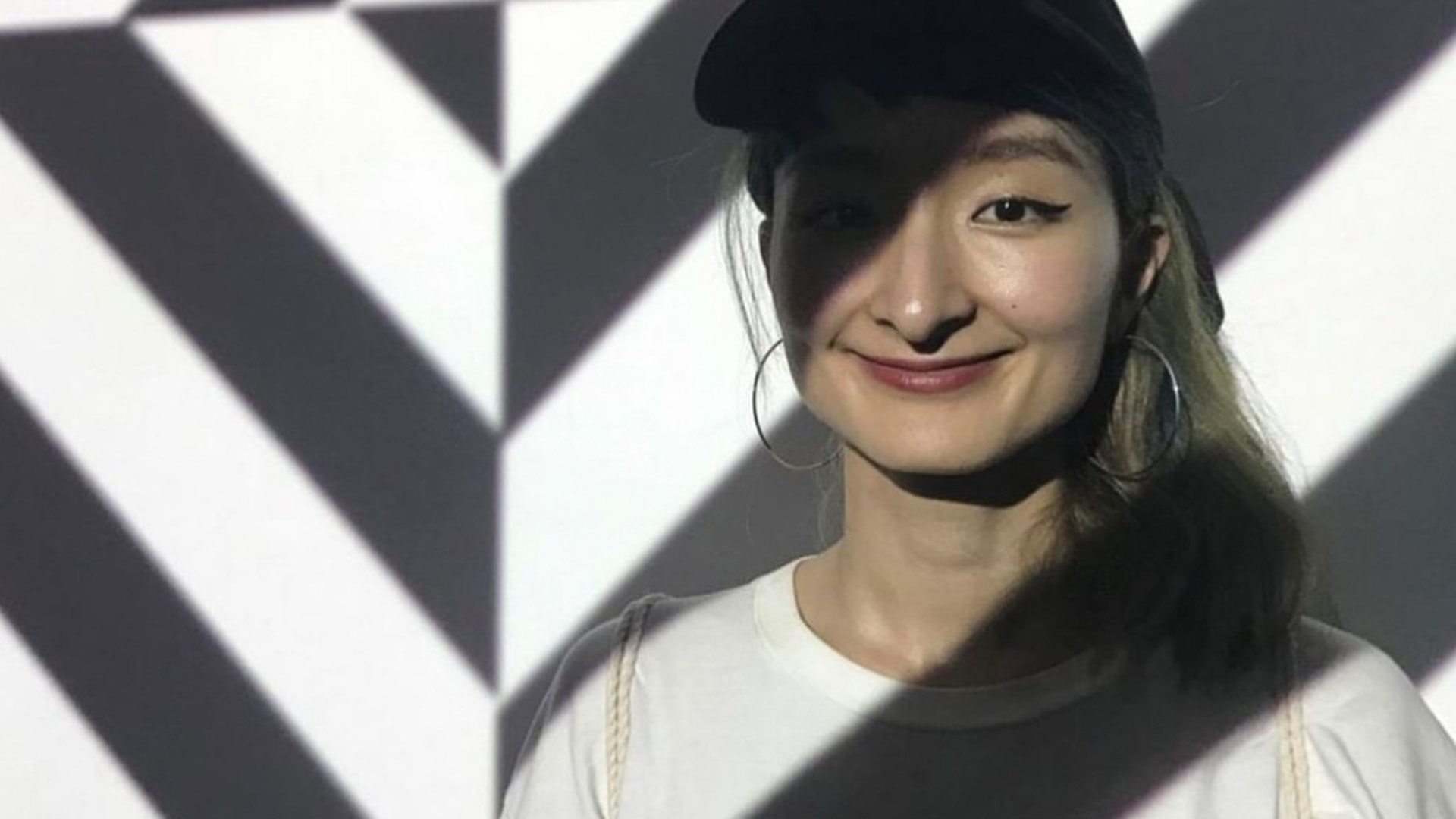
Fake ads, non-existent products and yōkai: DEADKEBAB
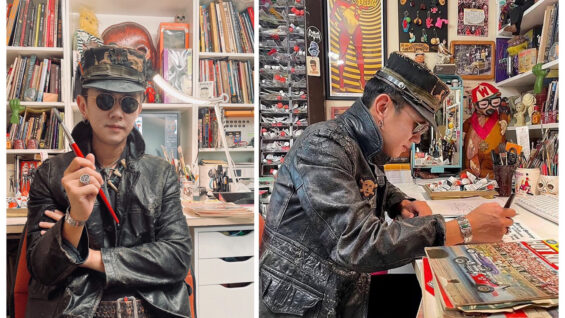
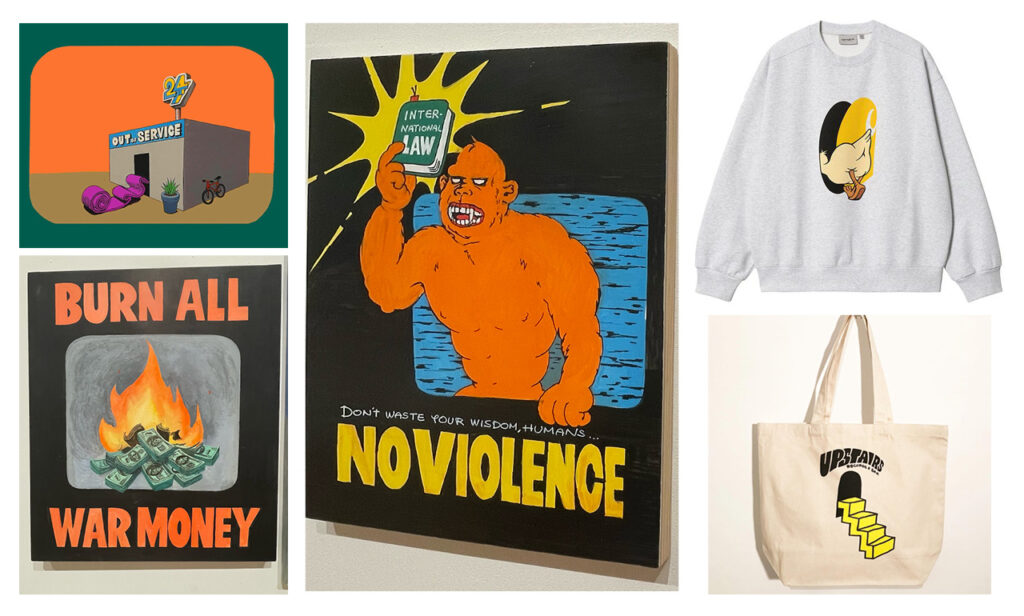
Blending Tokyo’s underground aesthetic with a pop visual language, DEADKEBAB transforms even the most ordinary everyday objects into something slightly strange, playful, and quietly unsettling. Through fake advertisements, non-existent products, and imagery that evokes yōkai, the artist draws viewers in before gently subverting their expectations. Working across music, graphics, ceramics, and live performance, DEADKEBAB’s multi-layered practice stands out as a distinctive voice shaped by the streets of Tokyo. We spoke with the artist about their influences, the city’s creative scene, and their own evolving practice.
“I see a small overlap between yōkai and my own work. They look playful or harmless at first, but they don’t fully reveal their intentions. I use pop visuals in the same way.”
What were the elements that shaped your artistic style?
As a kid, I was obsessed with Fraggle Rock and Teenage Mutant Ninja Turtles. I was drawn to the idea that there were other creatures living alongside us—out of sight, taking care of themselves, living their own lives. It was a mixture of fun and restlessness. Looking back now, I think those triggers gave me a vague longing for the underground before I even knew the concept.
As a teenager, outside of art school, I formed an electro music group called Trippple Nippples. We toured Europe, China, and the U.S. in DIY costumes—noodle wigs, popcorn ears, duct-taped breasts—and we just went completely wild. Being able to travel, see so many places, and meet different people felt incredibly lucky. There also was a chance to support DEVO on their East Coast tour, and it definitely shaped the way I express myself. After we went our separate ways, I shifted my focus toward visual art.
The name DEADKEBAB feels playful but unsettling at the same time. What does it represent for you? Where does it come from?
My friend and I were joking around and giving each other weird nicknames. I was eating kebab every day at the time, and when she saw me eat a piece that had fallen off, she called me that. It sounded like a monster’s name to me and I liked it, so I started using it as my artist name.
What kind of a role does the city you live in, Tokyo, play in your artwork?
I was born and raised in Tokyo, so it’s the place I naturally call home. Riding my bike through favorite spots, feeling every shift in the road, and drifting through the city like a stray dog—those moments are essential to me.
I’m drawn to writers like Genpei Akasegawa and Minoru Betsuyaku, who find new perspectives by focusing on the smallest details of the city. They taught me the fun of spotlighting on things that everyone takes for granted and just passes them by.
I’m also interested in the way SIDE CORE uses the city itself as an art tool. I think the observations I make while walking around inevitably influence it.
What are you currently obsessed with visually, sonically, or conceptually?
I’m interested in yōkai, Japanese monsters. I often read Shigeru Mizuki’s illustrated encyclopedias. Unlike ghosts, yōkai don’t have a clear purpose—they’re more animal-like, they just exist. That ambiguity is what I like about them.
Whenever something mysterious happens, people have often tried to explain it by blaming a yōkai. I find that impulse interesting. It’s a way of giving a form and a character even to the abstract or unexplained phenomena—something that feels closely connected to animistic thinking.
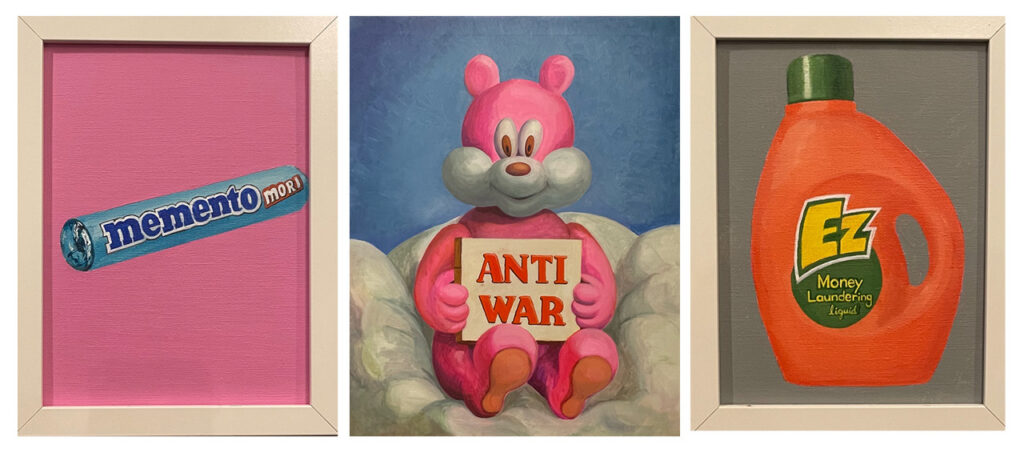
My approach is to look at everyday objects and words from a slightly skewed angle, hoping to make them laugh—or at least pause and think. I mainly visualize product packaging, advertisements or street signs that don’t exist, using a pop visual language to lull the viewer into a false sense of security.
I see a small overlap between yōkai and my own work. They look playful or harmless at first, but they don’t fully reveal their intentions. I use pop visuals in the same way. To draw people in, then gently unsettle their expectations.
Between brand collaborations, gig posters, painting, sculpture, and music, where do you find the most comfort?
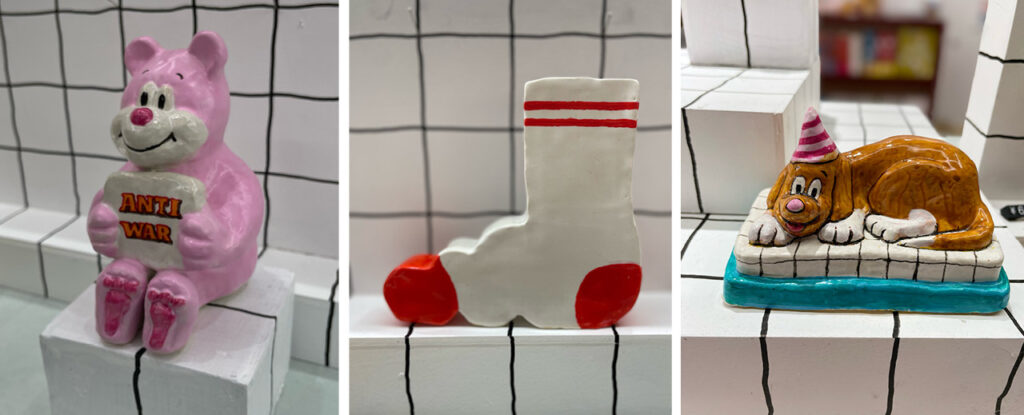
When I’m alone, I paint and make ceramics. I love using my hands and getting lost in the process—I get focused for hours and forget to sleep. Music balances that. It’s how I stay connected, something I enjoy and share with others.
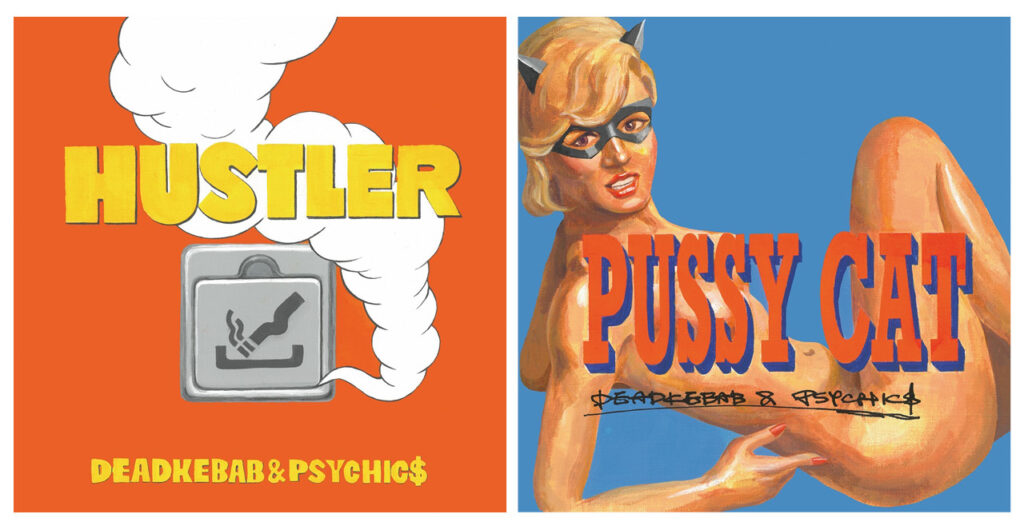
Currently I have a band, DEADKEBAB & PSYCHIC$, and we play gigs. I also DJ tropical music. I create visual works through wordplay and by cutting up images in my head, almost like a mashup. At the same time, I want to write lyrics the way I use paint: layered, colorful, and intuitive. Moving between these mediums has a positive effect on my creative process.
I also design graphics for apparel brands like Loose Joints, Hombre Nino, Carhartt WIP, Manastash, and Tightbooth. I feel grateful to work with brands that I truly like.
Which artists do you like from the younger Tokyo art scene?
There are two street-style artist brothers, Biko and Kenny, and I get so much energy from them every time. They came to Mowhok Artshop in Nakameguro when they were ten or eleven. Now I see them all the time at protests against colonialism.
I respect their works and political messages.
Recommended for a single day in TOKYO, by DEADKEBAB
I sometimes go to Takadanobaba, to the movie theater called Waseda Shochiku, where you can stay all day with just one ticket! They have a different program every week, showing everything from rare movies to classics, and their selection is always very cool.
There’s also a library donated by Haruki Murakami inside a nearby university. It’s cozy to spend time there. You can sit on the stairs and read. After that, I recommend going to the game center in front of the station. It’s such fun with a row of old arcade games from the 1970s.
The DJ bar called 88block can be a good way to end a day.
Recommended to explore TOKYO underground art scene, by DEADKEBAB
You probably already know about Koenji, so let’s talk about Shimokitazawa instead. I highly recommend Upstair Records, a record bar opened by a man named Hiyoko. He used to run a small record store called Weekend Records out of his home in New York in the 2000s, before returning to Tokyo and opening this place. I always go there, because we have a nice time talking about movies and music. I designed and silkscreened their tote bags.
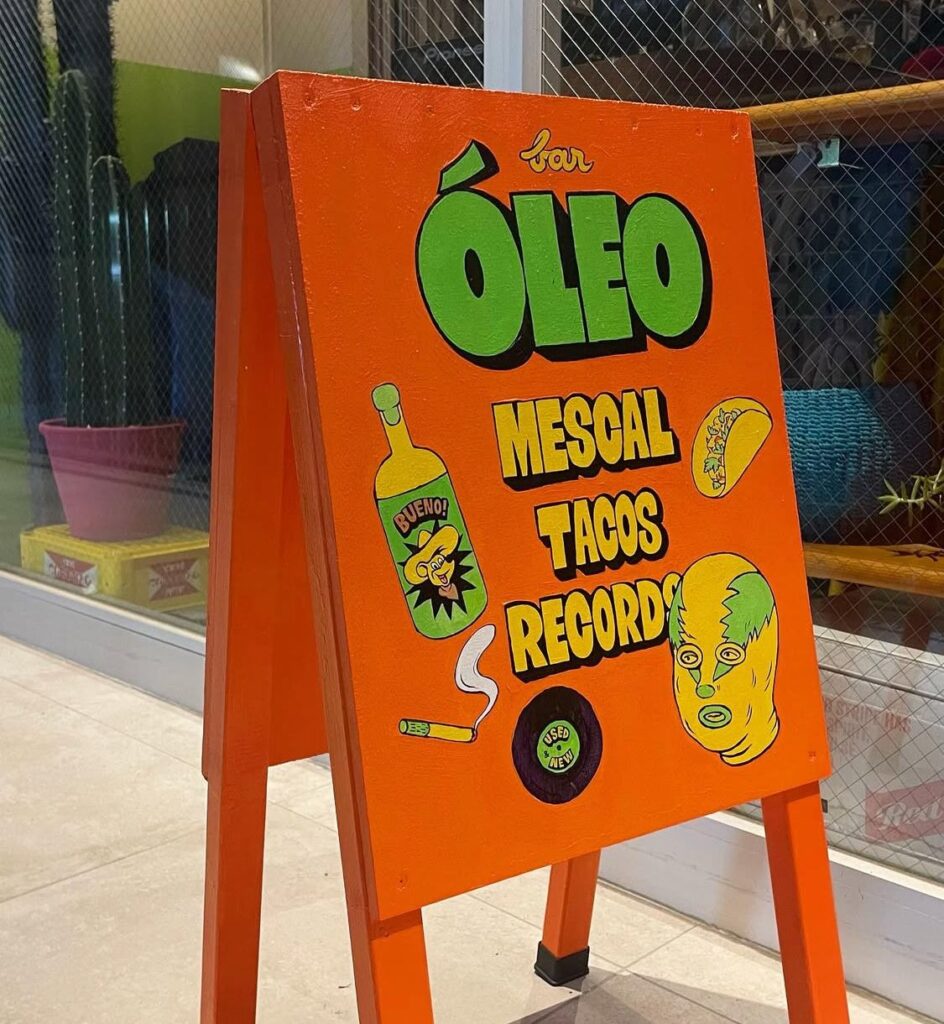
I also made the signboard for a bar called Oléo nearby. The hip-hop DJ Shigeki is also crazy about Latin music, and he often hosts Latin music events with DJs from overseas.