

In pursuit of unresolved mystery: JUNJI ITO
Junji Ito’s graphic world is known for its ability to draw a sense of cosmic unease out of the atmosphere of small-town Japan. Beginning with Tomie in the late 1980s, his career quickly evolved into a distinctive language of horror shaped by grotesque transformations, obsessive repetitions, and unexplained phenomena. Spanning cinematic adaptations to fashion collections, this visual universe reminds us that horror is also a way of producing atmosphere. Junji Ito’s narratives continue to demonstrate that unresolved mystery remains one of the most powerful tools of contemporary horror.
Junji Ito will visit Istanbul, Izmir, and Ankara between May 16–20 as Kayıp Kıta’s guest, appearing at a series of fan meetings, talks and special events.
“If everything were explained logically, I feel the sense of fascination would diminish.”
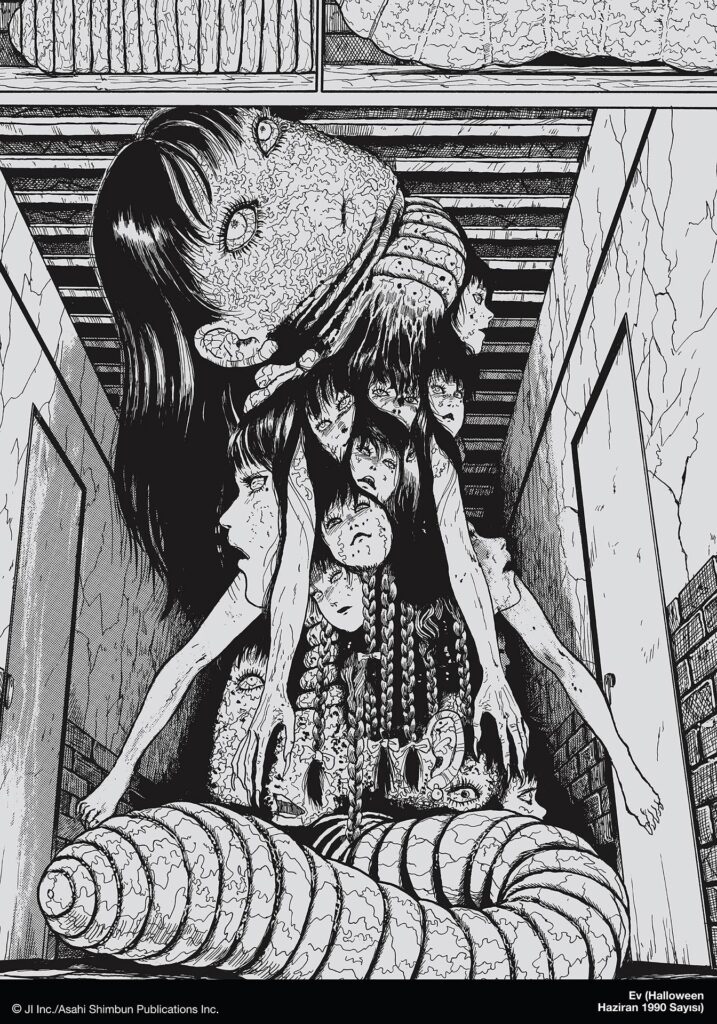
In your works, fear is often found not in sudden shocks but in processes that progress slowly and irreversibly. What draws you to this approach?
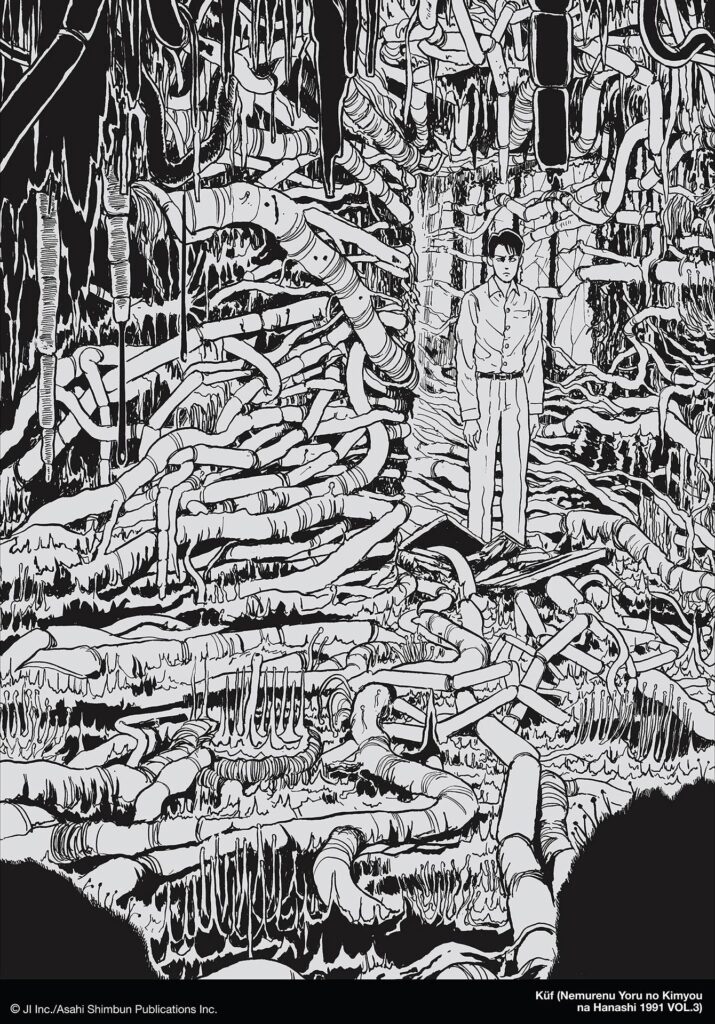
The same can be said of horror films. Personally, I prefer fear that creeps in gradually rather than fear created by sudden shocks, so when I draw my manga, I aim for that kind of effect.
Your stories rarely present “resolution” or “ending” in the conventional sense. In horror, what does “an ending” mean to you?
My horror manga mainly deals with supernatural phenomena. I believe the appeal of the supernatural lies in the fact that its mysteries cannot be fully solved, so many of my stories end without resolving everything and leave the mystery intact. If everything were explained logically, I feel the sense of fascination would diminish. In that sense, horror differs from detective-style mysteries.
Repetition plays an important role in your storytelling. Images, patterns, and even narrative developments are repeated. Do you see repetition as a way of intensifying fear?
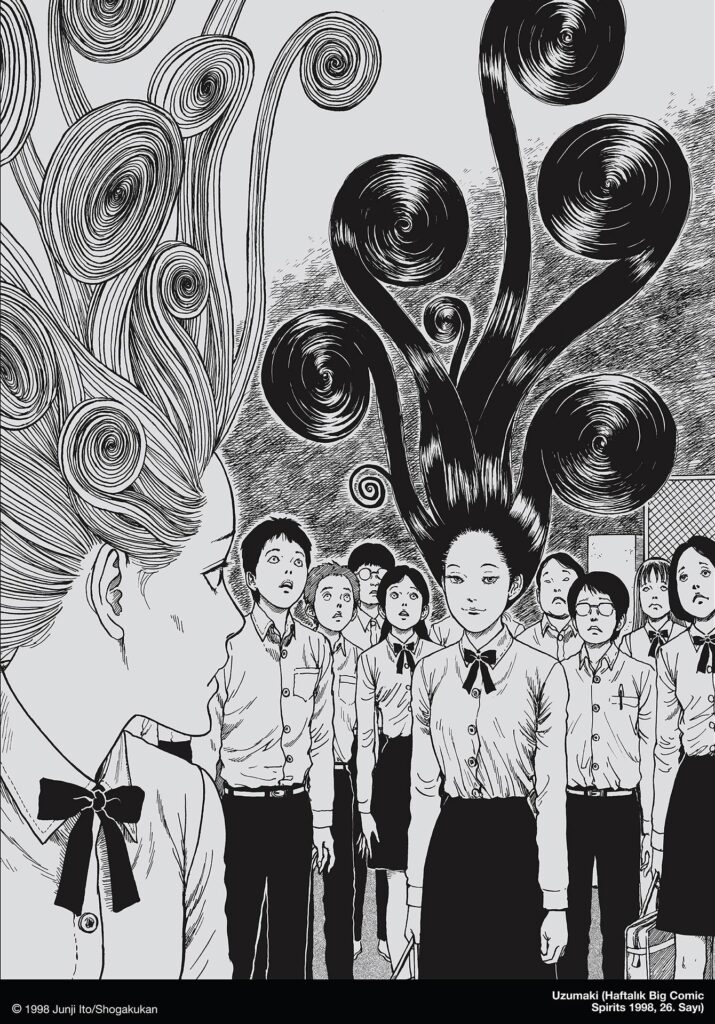
I do not draw horror manga with a conscious intention of using repetition. However, in comedy, repetition is often used to create laughter. Fear and laughter are often said to have similarities, so repetition may sometimes strengthen fear as well.
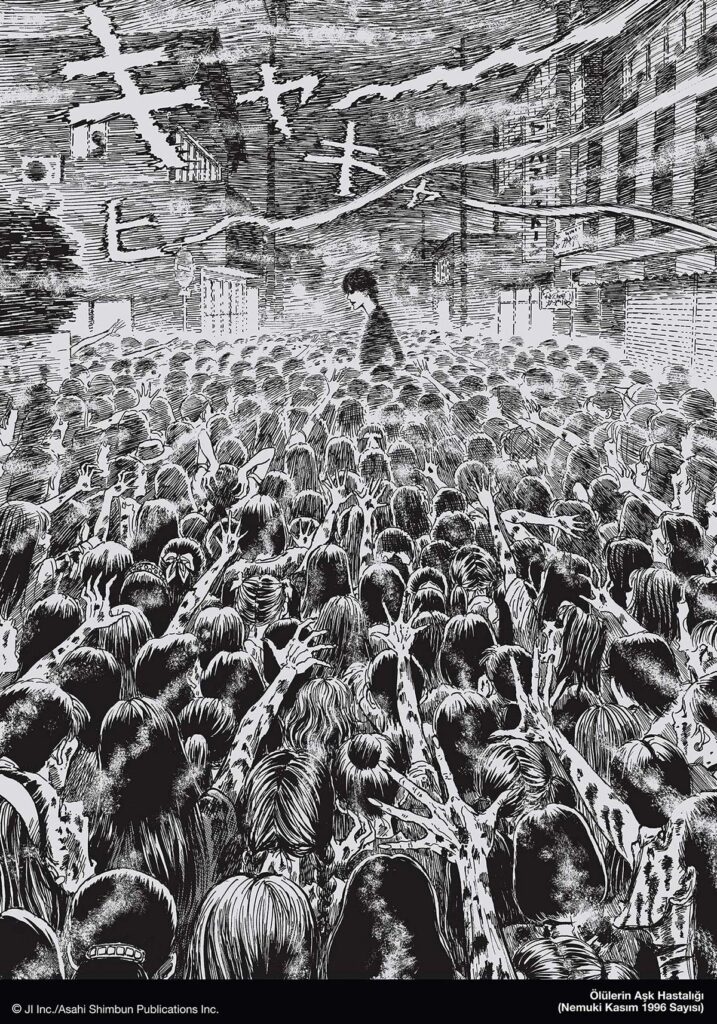
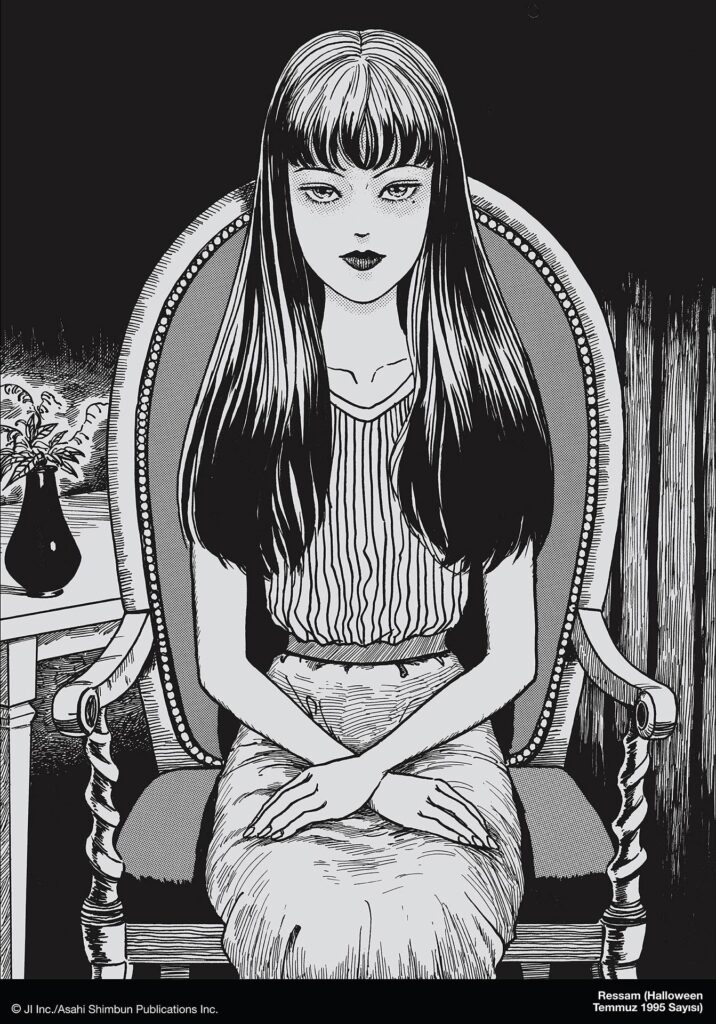
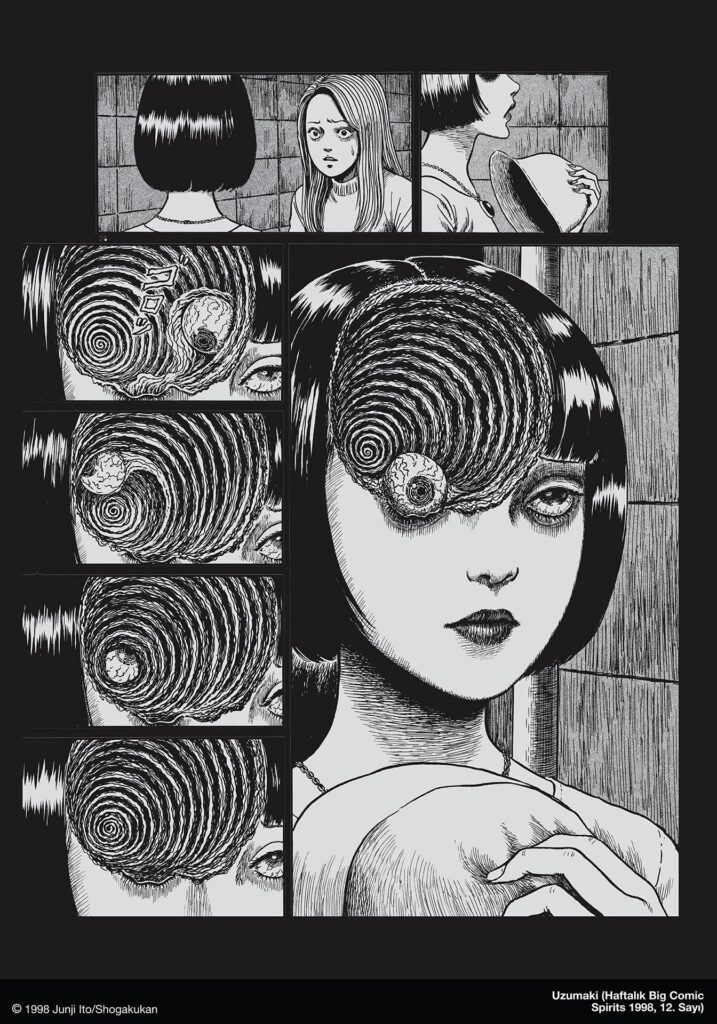
In your own creative process, what role does repetition play? In your working habits, how much do you rely on routine versus change (or disorder)?
With each new work I try to explore new elements, but my personal lifestyle relies heavily on routine. Therefore, my creative process also tends to proceed within a routine. At the same time, I often pay attention to small changes that slip into everyday life and gain new ideas from them. Precisely because daily life is usually stable and uneventful, I think it becomes easier to find inspiration in those small irregularities that appear within it.
Your page composition is extremely meticulous and creates a sense of wandering through the page. When a reader’s gaze moves across a page, how do you imagine and design that movement? How do you think about guiding it, confusing it, or even resisting it?
When composing panels on a page, I pay careful attention to guiding the reader’s gaze. The size, shape, and placement of panels are used to express the movement of characters and the flow of time. As I draw a page, I repeatedly follow the panels with my own eyes to judge whether the effect works. Since I have been familiar with manga since childhood, I believe the sense of arranging panels effectively to draw readers into the story developed intuitively. However, I also learned from the editor who supervised my debut that varying the size of panels—creating contrast and rhythm—is important to keep readers engaged.
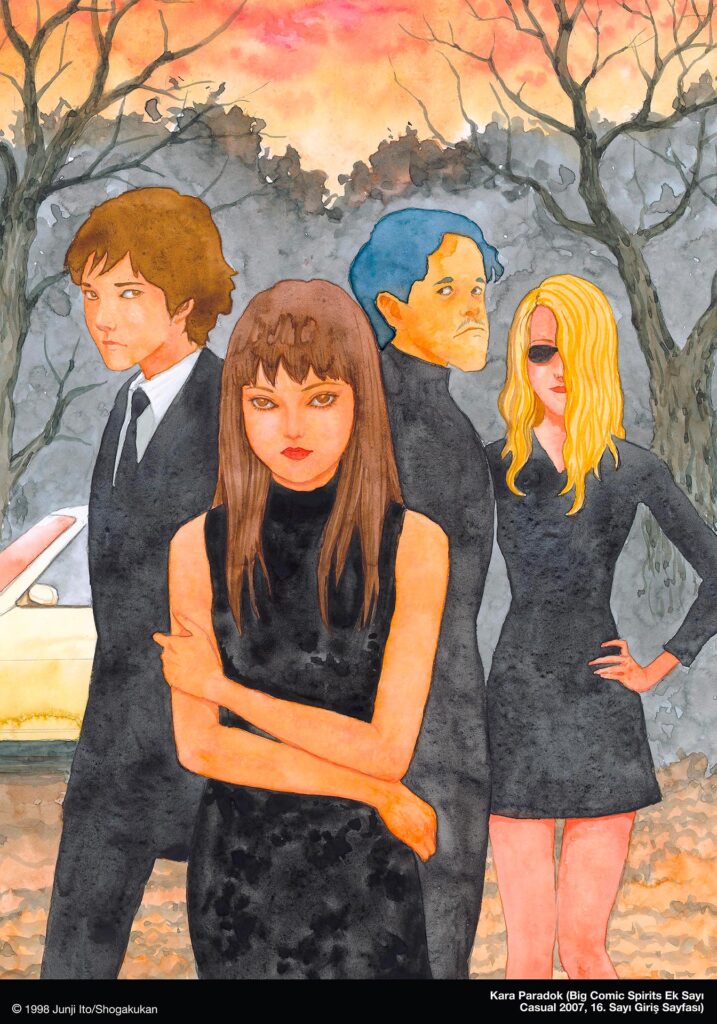
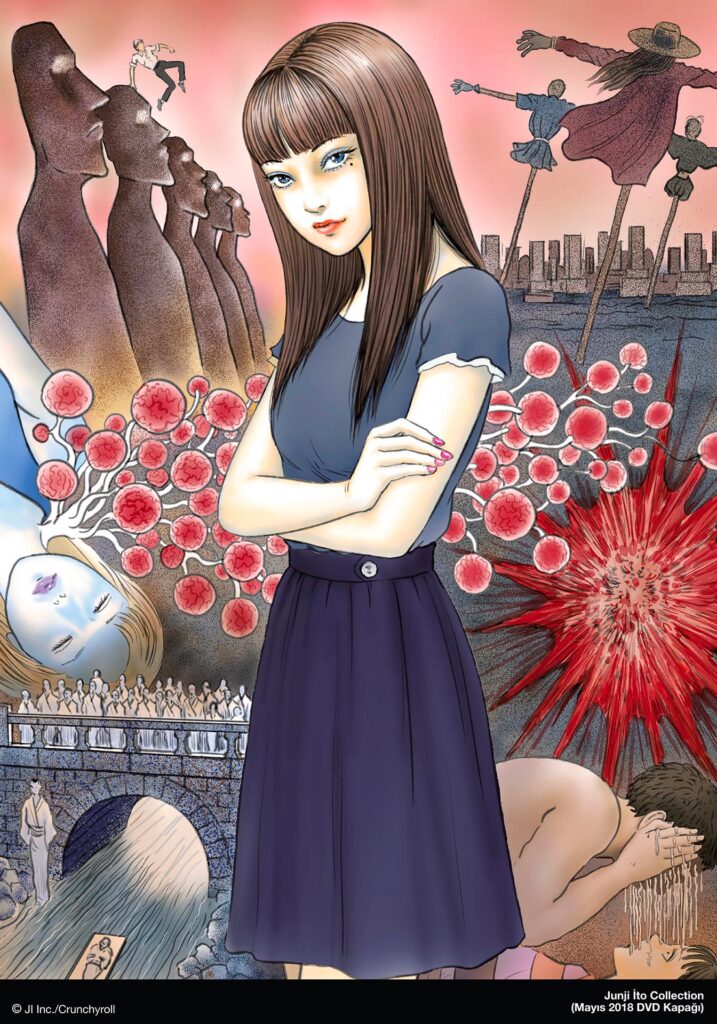
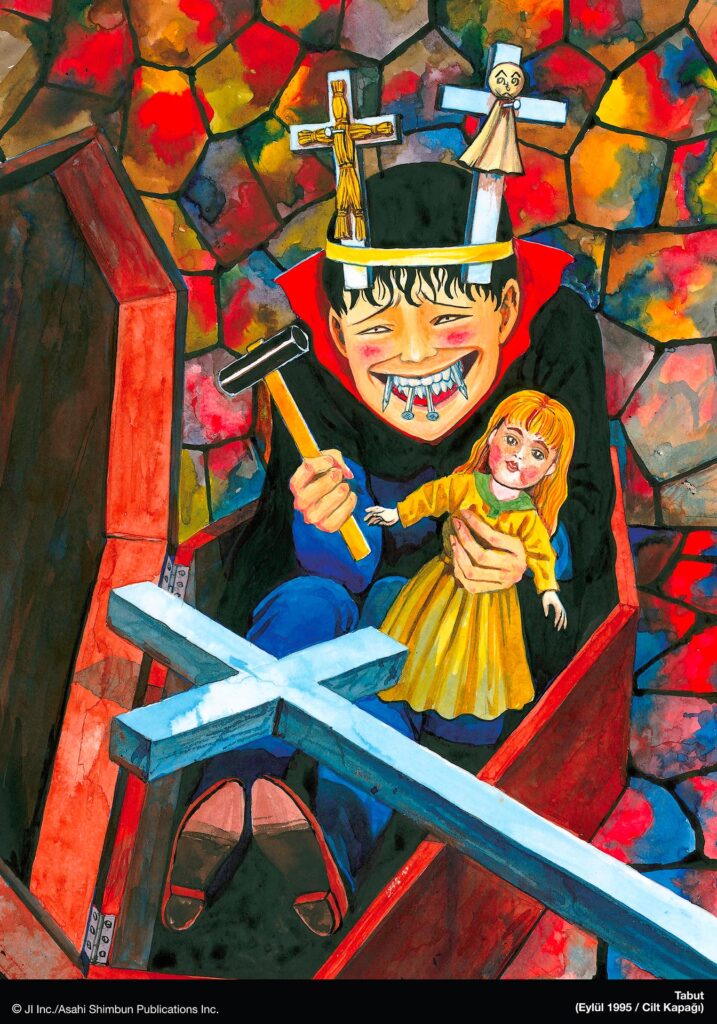
Your works have been adapted into various media. How do you think the work changes once it leaves the page?
In visual adaptations, the director’s perspective and intentions are added, so naturally the work changes. In animation, the individuality of the director and voice actors becomes part of the work. In live-action adaptations, the individuality of directors and actors is combined with elements such as sound design, lighting effects, and the technical constraints unique to live-action filmmaking. As a result, each version develops its own distinct character. I personally enjoy these changes. In merchandise and other collaborations, working with different companies and artists sometimes reveals new aspects of the characters I created, which I also find very exciting.
Many young illustrators and storytellers admire you, and they are likely looking forward to your advice during your visit to Turkey. When you were young, were there any words or experiences that expanded your thinking about art or changed your approach? Whose words were they, and when did you encounter them?
Through the science fiction novels of the Japanese writer Yasutaka Tsutsui, which are filled with innovative ideas, I became aware of how fascinating bold and unconventional ideas could be. Later, the weird fiction of the American writer H. P. Lovecraft expanded the range of what I thought horror could be. Until then, I had never imagined that the universe itself could become a subject of horror.
Something about TOKYO that still remains a mystery to JUNJI ITO
I currently live in the Kanto region, but in Chiba Prefecture rather than Tokyo, so I cannot claim to know the city very well. However, when I think about Tokyo, the underground world—such as the vast railway networks and sewer systems running beneath the city—feels somewhat mysterious.
A scent distinctive to TOKYO according to JUNJI ITO
It may not be unique to Tokyo alone, but the sewer-like smell you sometimes encounter in narrow back streets between tall buildings in the city is, for me, a smell that represents Tokyo. When I lived in the countryside and came to Tokyo to visit publishers, that smell left a strong impression on me.
A writer that best captures the soul of TOKYO according to JUNJI ITO
Perhaps Edogawa Ranpo. His mystery novels set in Tokyo during the Taisho and early Showa periods are full of mystery and fascination. Although they depict a Tokyo of the past rather than the modern city, he is the writer whose work most strongly evokes the image of Tokyo for me.
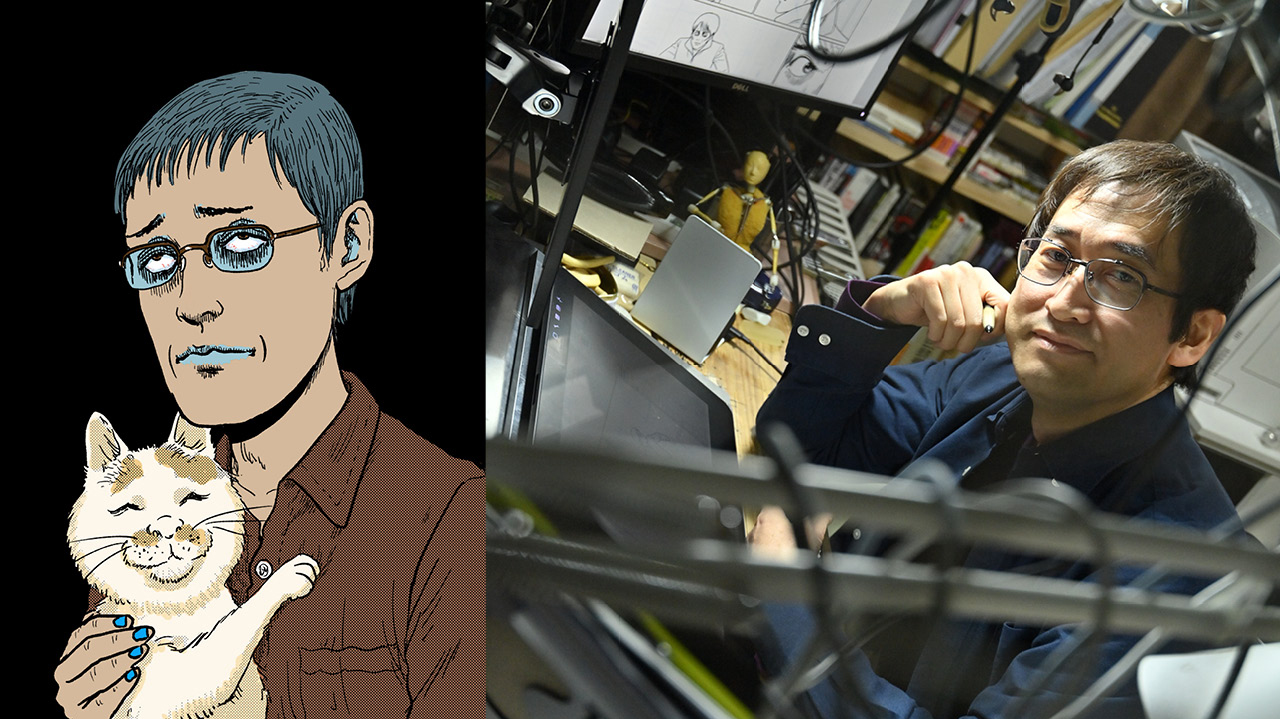
Photography © Tetsuya Higashikawa/Asahi Shimbun Publications Inc.
Self-portrait and drawings © JI Inc./Asahi Shimbun Publications Inc.