

In a dreamlike realm, where time has shattered: KUUNATIC
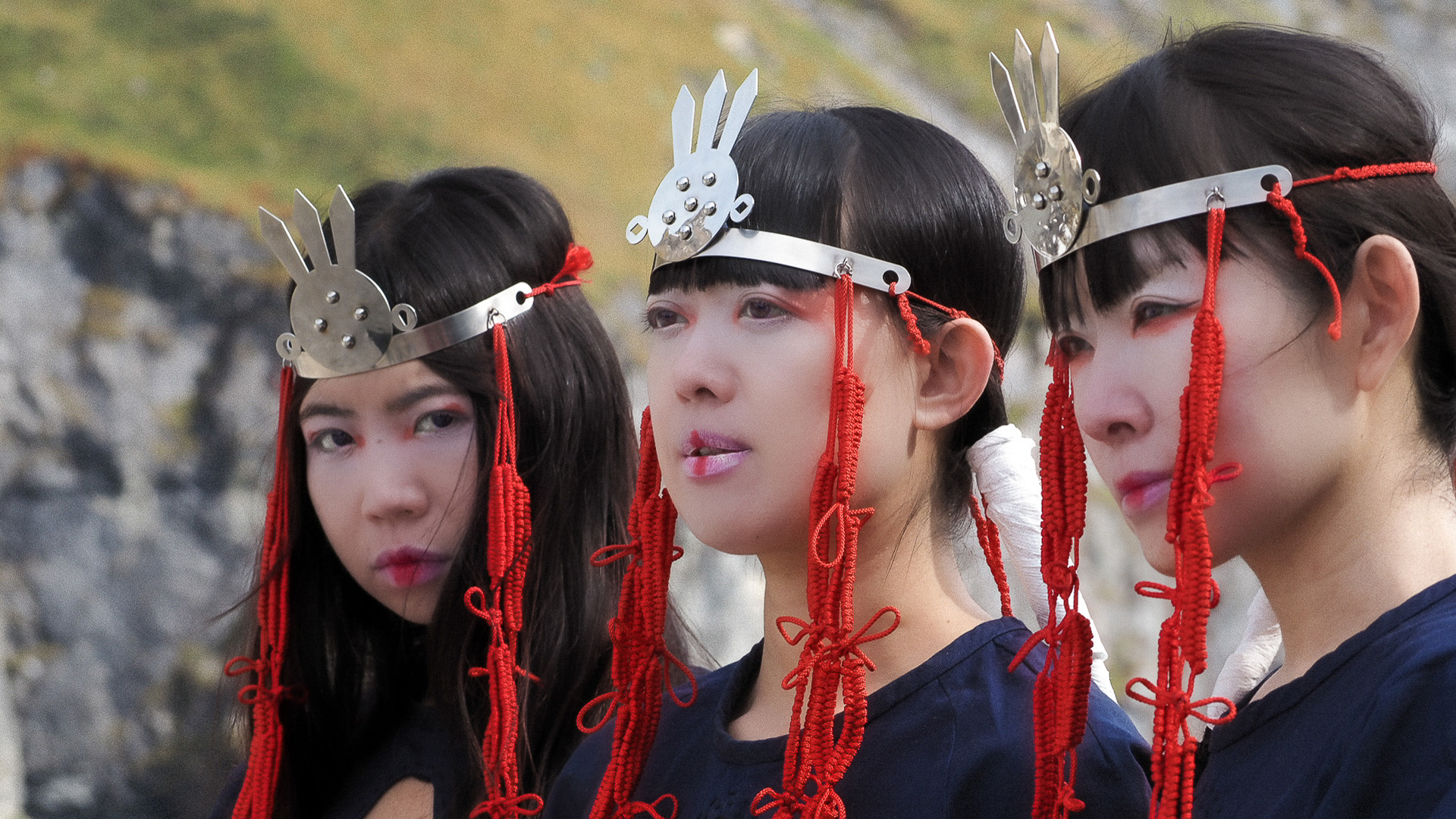
The sonic world Kuunatic creates feels like waking up in the middle of a post-apocalyptic tribal ritual. Blending traditional Japanese melodies, Southeast Asian percussion, and the cosmic textures of progressive rock, the trio simultaneously evokes cultural memory and a sense of the future. We spoke with the band members about the elements that shape their music and the role that imagination plays in their creative process.
Tune in:
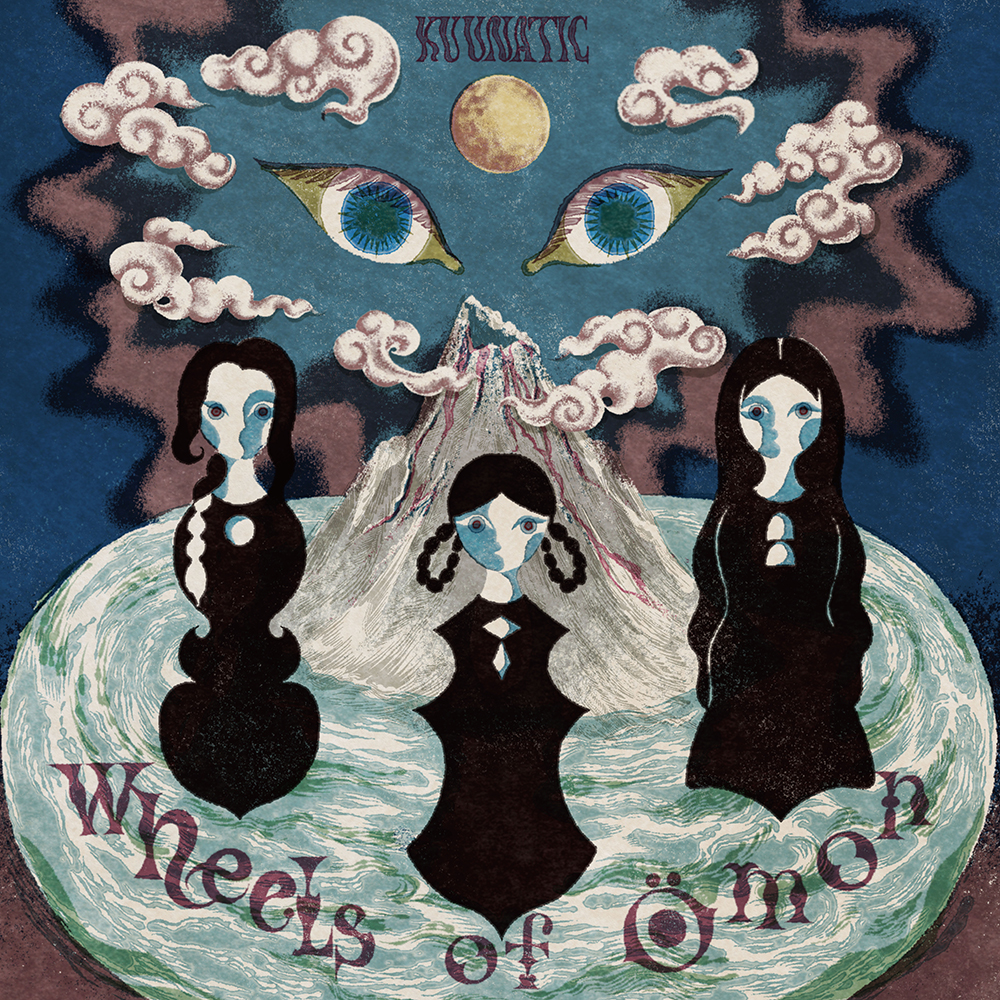
KUUNATIC released Wheels of Ömon in 2025. Rich with thematic depth that is hard to resist, the album features a broad sonic palette alongside traditional instruments, once again inviting listeners to the imaginary planet of Kuurandia—a world we’ve visited in their previous records. Ömon, which gives the album its name, is the sun of this otherworldly realm. Take your time, immerse yourself in the experience from beginning to end.
How did Kuunatic’s psychedelic / avant-garde style take its shape? As a trio, what shared values or instincts help you create thematic depth in your tracks?
When we first started composing, we completely ignored music theory and conventional formats, as we were all beginners on our respective instruments. However, paradoxically, we had a very clear image of what we wanted to create. This imbalance is what led to our avant-garde style.
As a group, we constantly share a fascination with natural phenomena, the supernatural, distant futures, and ancient pasts—things beyond reality. Spending long periods together, especially during the extensive tours, sometimes leads to disagreements. However, when it comes to primitive and fundamental ways of thinking, we strangely always share the same perspective.
In 2025, we had the chance to experience your highly anticipated second album, Wheels of Ömon. What new elements or experiences did the creative process behind this album bring you?
In we incorporated more acoustic traditional Japanese instruments and focused more on vocals and singing. We also experimented with spontaneous performances, capturing momentary beauty in our recordings.
Like in Gate of Klüna, each track has its own story. This time, we placed even greater emphasis on translating narratives into music, resulting in a richer expression. By reading the stories while listening to the album, you’ll be able to grasp our concept vividly—so we highly recommend doing so! (The record and CD versions include an insert with the stories.)
“By blending ancient and modern, and incorporating not only Japanese traditions but also various musical cultures and ideas, we create a unique world that represents our fictional tribe.”
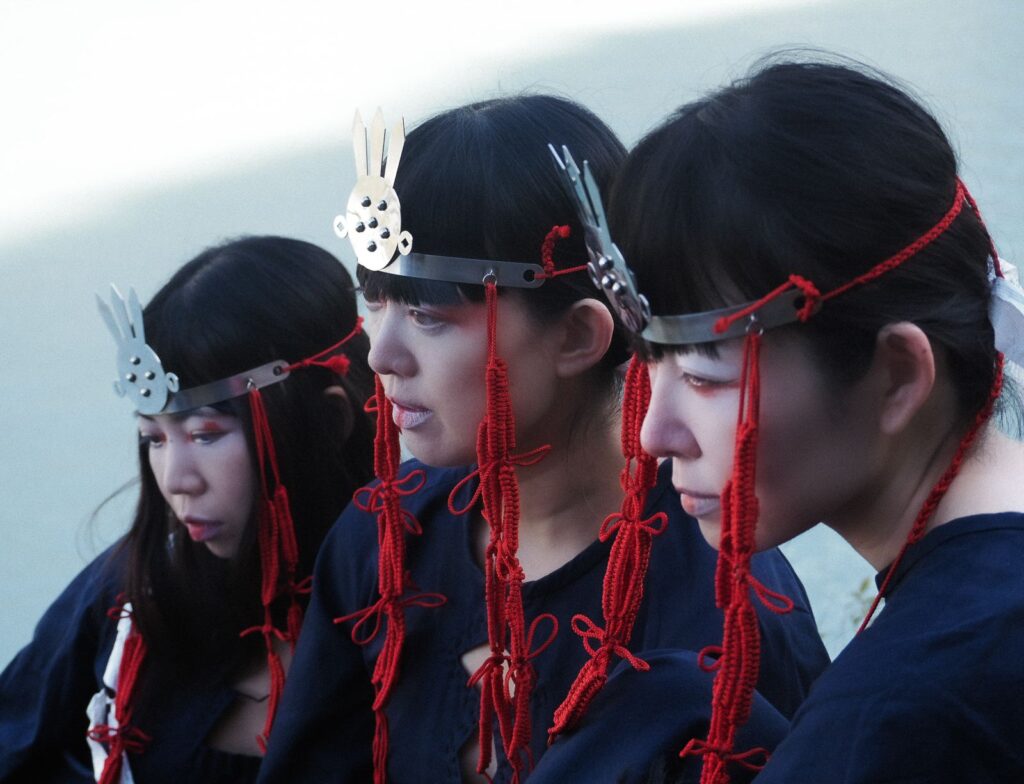
The foundations of this album were laid during your residency at the PALP Festival in Switzerland, and the recordings took place in the Netherlands. How do you think being away from home has influenced this work?
Actually, the three of us each live in different countries, so creating an entire album together remotely was no easy task. Between the end of 2023 and the summer of 2024, we recorded and exchanged our parts while holding numerous online meetings.
At a certain point, we realized that going straight into a recording studio without meeting in person would be too risky. Fortunately, PALP Village supported us, allowing us to spend eight days together in a studio before recording. The moment we could finally share our long-held individual musical ideas in real sound, it was deeply moving.
We rarely get to spend time together, unless we are somewhere away from our respective homes. This might be one of the factors behind our concept of an imaginary land as the setting for our music.
Japanese traditional instruments play an important role in Kuunatic’s sonic universe. For example, Wheels of Ömon opens and closes with the shō, a bamboo instrument. What draws you to the sounds of the past?
Using Japanese traditional instruments helps add folkloric and ceremonial elements to our musical landscapes, making them more mystical.
By blending ancient and modern, and incorporating not only Japanese traditions but also various musical cultures and ideas, we create a unique world that represents our fictional tribe.
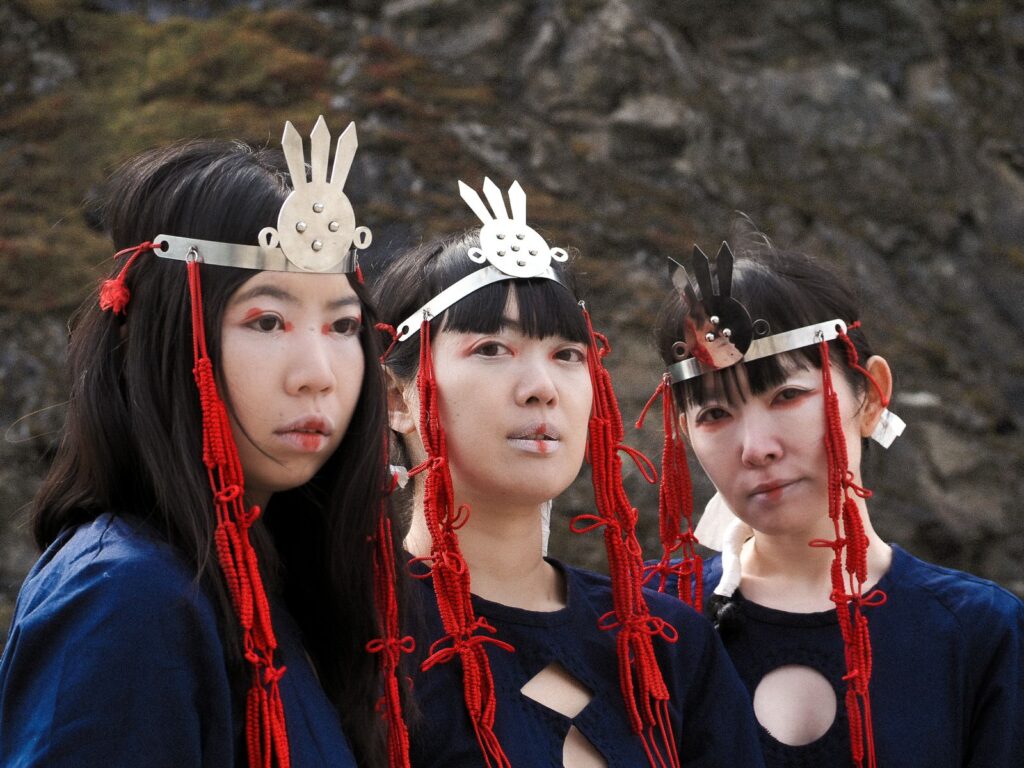
Imagination is clearly a crucial element in Kuunatic’s creative process. How much do Japanese traditions and artistic forms influence your ability to craft fantastical worlds and mystical narratives? Are there any specific films or books that have been particularly inspiring?
Growing up in Japan, we were constantly surrounded by fantasy worlds—whether in myths, traditional rituals that honor the unseen, or contemporary pop culture such as manga, anime, and video games.
As an island nation with a history of closed borders, Japan has long fostered a culture of imagining the unknown and reinterpreting limited information in unique ways. This way of thinking is deeply connected to what we do as artists.
Here are some specific inspirations from each member:
Yuko: Kojiki (Records of Ancient Matters), Whether the One Really Universe, The Night Life of Trees.
Fumie: The sci-fi series Raised by Wolves by Aaron Guzikowski, which strongly influenced the making of this album.
Shoko: Dreams by Akira Kurosawa.

Something about TOKYO that still remains a mystery to KUUNATIC
The fact that so many contradictions coexist and overlap—yet somehow, the city still functions.
Spots in TOKYO that travelers usually miss, but shouldn’t, according to KUUNATIC
Yuko: Small live houses like Ochiai Soup and Forestlimit.
Fumie: Goma-taki (fire ritual) at Fukagawa Fudōson Temple.
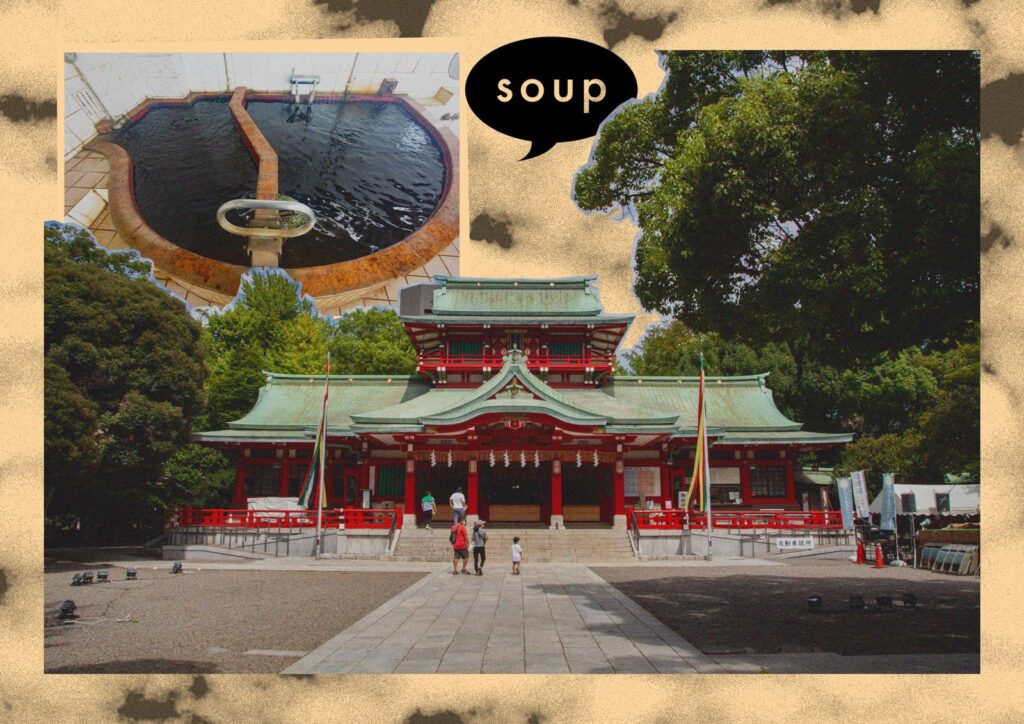
Shoko: Kuroyu onsen in Kamata, a walk along the Tamagawa River after getting off at Tamagawa Station, and watching the sunrise or sunset from Tamagawa Sengen Shrine—these places let you experience the boundaries between nature, urban life, and another dimension.
A scent that’s distinctive to TOKYO according to KUUNATIC
The scent of a clear morning—or rather, the absence of scent itself.
There is no distinct smell, yet it carries a sense of urban briskness and clarity that embodies the hustle and serenity of Tokyo.