

“Like breathing”, and naturally inimitable: Sounds of PHEW over the decades
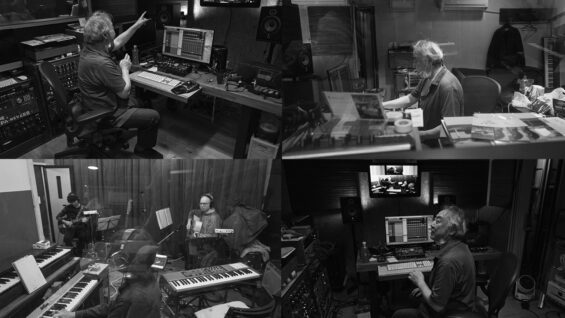
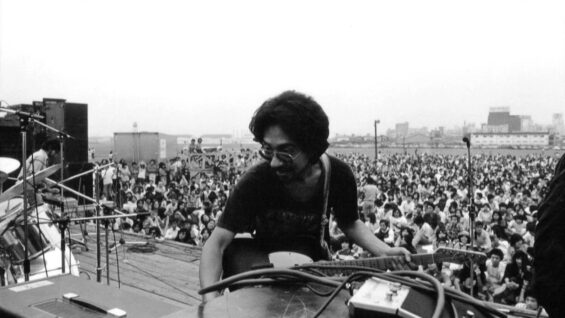
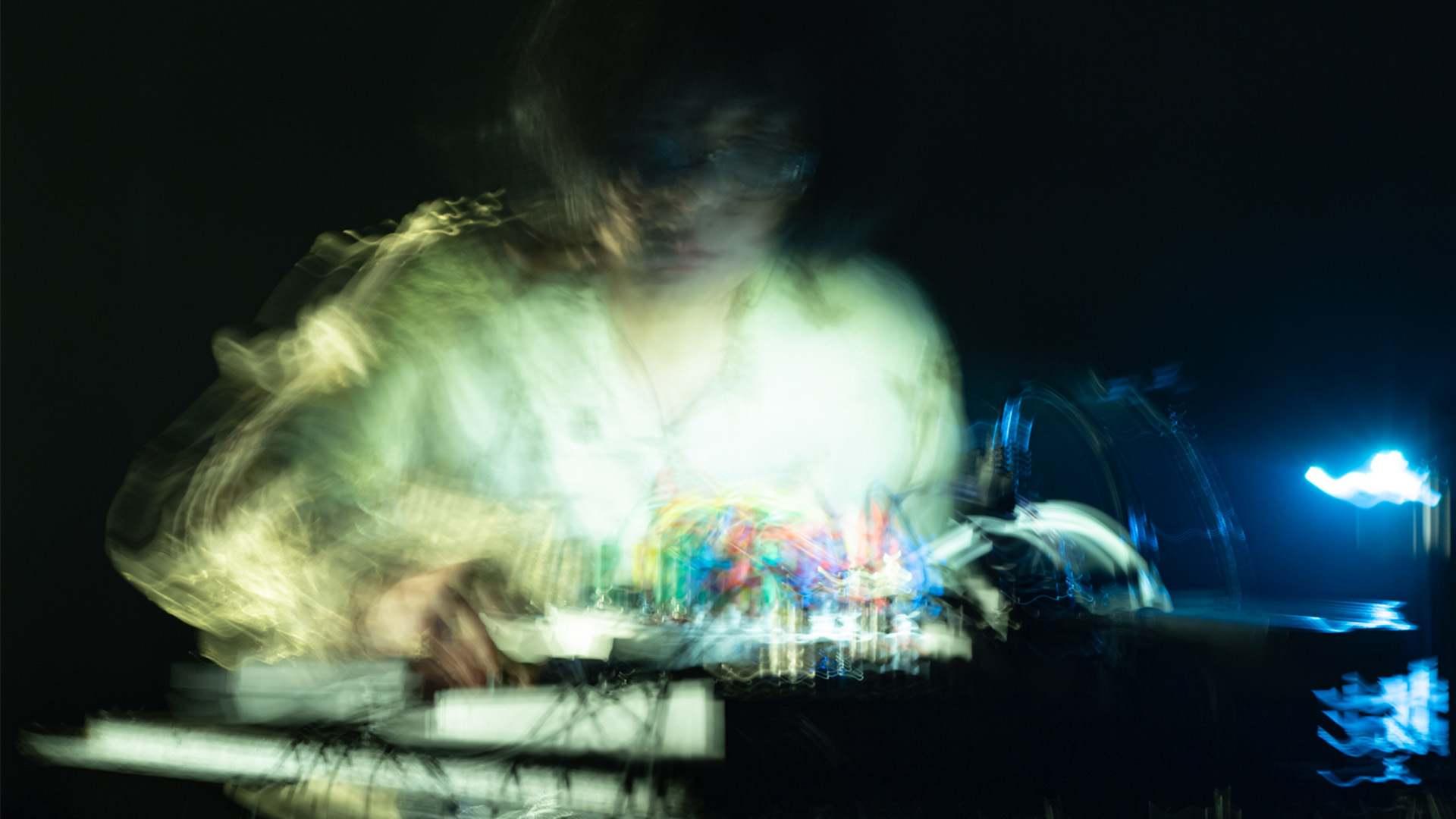
From her beginnings as the singer of the striking band Aunt Sally during the post-punk haze of the late 1970s, Phew has been crafting an avant-garde sonic journey unlike any other. A passionate explorer of analog gear, she acts like a sound sculptor whose voice too becomes an instrument, as she creates an unconfined landscape of expression. No surface, all feeling, and absolute pleasure.
Tune in:
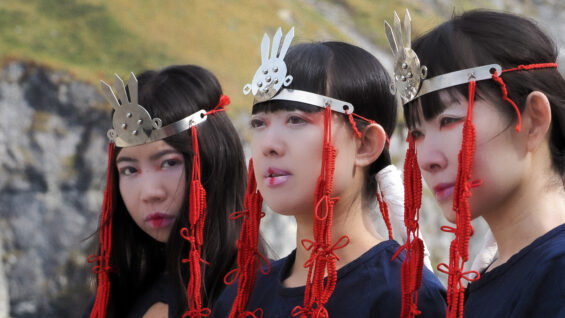
Phew’s solo productions from the 2010s is a good start. The synth-driven A New World and the cover collection Five Finger Discount come highly recommended. Voice Hardcore, on the other hand, is a revolutionary album created solely with her voice. Meanwhile, the ever-evolving story of Phew owes much to the chemistry she’s built with her collaborative musical companions over the years. For that reason, tracing the path of her joint projects can also offer a mind-expanding experience.
“Recording feels like swimming along a timeline, while performing live is like watching the ripples created by sound vibrations.”
How did growing up listening to and being influenced by foreign (mainly English-language) music shape your identity as a musician and singer?
As a child, I was fascinated by shortwave radio. The languages and music from distant, unknown countries captivated me. This led me to perceive song lyrics not as mere means of communication, but as sound itself. I started my musical career as a vocalist, but from the very beginning, I regarded vocals as being on the same level as other instruments. This perspective has greatly influenced my work as a musician.
Yes, your voice blends into the music as an equal element to the instruments, forming a unified whole. In your songwriting process, is there a difference in how you structure vocals and instruments?
I don’t distinguish between vocals and instruments. However, I often record the rhythm track first before laying down the vocals—simply because it’s more efficient.
Besides seeing Sex Pistols, live in London, were there other early shows that motivated you to start your own band?
I didn’t get to actually “see” the Sex Pistols live in London, in 1977. To be precise, I was first shocked by a brief clip of a Sex Pistols performance that aired on Japanese TV at the end of 1976, which led me to go to London. Rather than a specific band or show, it was the punk movement in New York and London, between 1975 and 1977, that directly inspired me to start my own band.
Do you have different approaches to writing lyrics? How do you decide which language to sing in?
I don’t start with a set theme; instead, I begin by writing lyrics from a single word that comes to mind. Of course, when writing lyrics upon request, this isn’t always the case. When I want to avoid focusing too much on the meaning of lyrics, I sing in a language other than my native tongue, like English. In my 2010 album Five Finger Discount, I covered “Love Me Tender”, but if it had been in Japanese, I probably wouldn’t have been able to sing it.
How does singing in the studio during recording differ from performing live on stage?
To use an analogy, recording feels like swimming along a timeline, while performing live is like watching the ripples created by sound vibrations. Additionally, live performances are influenced by the audience’s reactions. Recording and live performances are completely different experiences, but both are enjoyable.
What is your internal process like, while creating music and expressing emotions through it?
It may sound like a Zen paradox, but I simply empty myself and let the sound come out naturally, like breathing.
Do you consider yourself a perfectionist when it comes to understanding and achieving the sounds and tones you envision?
I used to be [a perfectionist]. I was obsessed with sound textures, paying close attention not only to microphones but also to cables and power sources. But I no longer do that—it’s just not that kind of an era anymore.
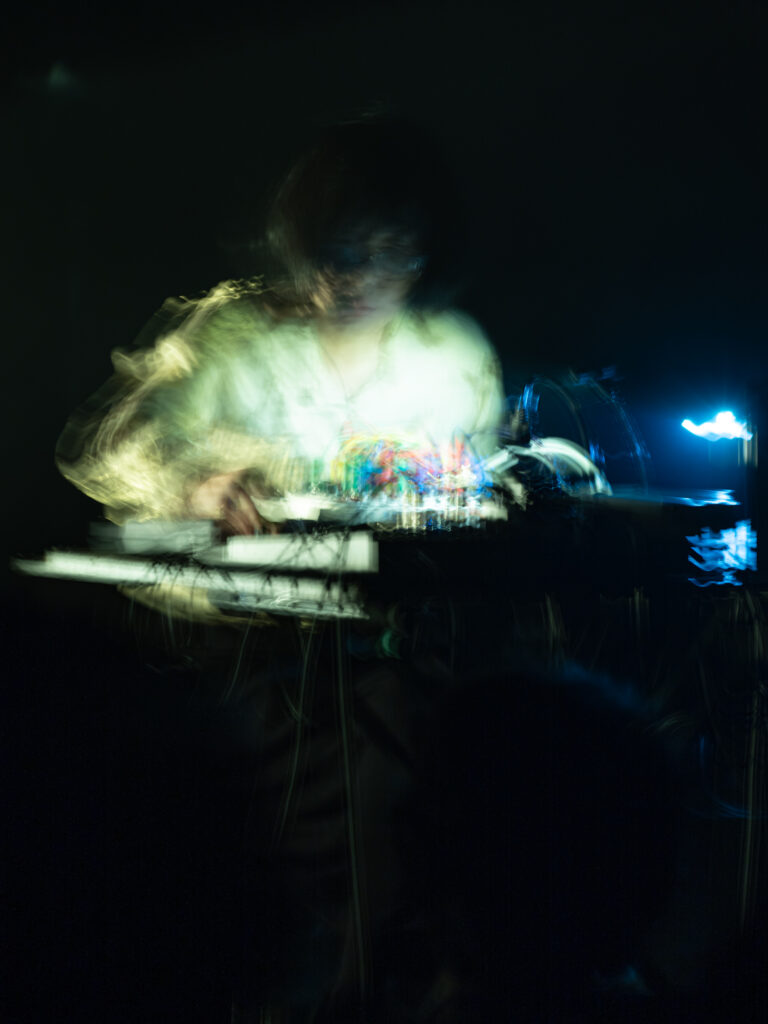
“Analog synthesizers are challenging in terms of reproducibility, as voltage fluctuations alter the sound. When the voltage is unstable, the sound wavers along with it. That unpredictability is part of the charm of analog gear.”
How do you deal with things in music that you can’t control? Do you ever deliberately plan to “lose control” in your creative process, or are you always in full control?
Uncontrollable elements and unexpected occurrences are sources of inspiration. Planning to “lose control” is too difficult and time-consuming, so I’ve never done it. Playing in a fully controlled manner is boring, so when performing live, I always allow room for unexpected occurrences in my set.
How does using analog setups contribute to spontaneity and unpredictability?
Analog synthesizers are challenging in terms of reproducibility, as voltage fluctuations alter the sound. When the voltage is unstable, the sound wavers along with it. That unpredictability is part of the charm of analog gear—sometimes, you turn it on and hear completely unexpected sounds, which often lead to new ideas.
What is the most satisfying moment in a live performance for you?
Regardless of venue size, during a performance, I’m too busy operating my equipment to look at the audience. But when the performance ends and I raise my head to bow, I can feel that the atmosphere in the room has changed compared to before the show. That moment makes me happy.
Your live performances seem to create a unique experience where music and body movements merge, making instruments an extension of your expression. As a performer, how do the audience’s presence and their physical reactions affect you [even though you cannot directly look at them]?
Even though I don’t have time to directly look at the audience during a performance, I can still sense whether they are bored, tense, or engaged. Even if I think I’m not directly influenced by them, when I later listen to the recording, I sometimes realize my performance was subconsciously shaped by their reactions. That’s the thrill of live performances.
What is the appeal of collaborating with other musicians?
The unexpected results that emerge.
Has your musical approach or perspective changed over the years?
Before the pandemic, I preferred recording in the studio rather than performing live. But after experiencing restrictions on freedom, I realized the importance of spaces where people can gather and interact. Now, I play live much more frequently than before the pandemic.
I heard that you recorded an album with Danielle de Picciotto! Are there other ongoing projects and releases in the making?
I recently created a long-form track for a Glasgow FM radio station’s request. It was released in April, you can check it here at Radio Phrenia.
Additionally, I’m currently working on an album with I.P.Y., a trio consisting of ex-BOREDOMS’ Yoshimi and ex-DNA’s Ikue Mori. I’m also recording a solo album.
A scent that’s distinctive to TOKYO according to PHEW
The scent of ramen broth wafting out from restaurant ventilation fans is Tokyo for me. It’s not necessarily a unique or symbolic scent of Tokyo, but compared to Osaka and Kobe, where I grew up, Tokyo has an abnormally high number of ramen shops.
TEENAGE KICKS: PHEW’s early influences from Japan
Artists: Aiko Miyawaki, Toko Shinoda.
Filmmakers: Kenji Mizoguchi, Mikio Naruse.
Writer: Yasunari Kawabata.
Manga Artist: Kazuo Umezu.
Musicians: Toshiro Mayuzumi, Takehisa Kosugi.
There are many more names I could mention, these are just a few.