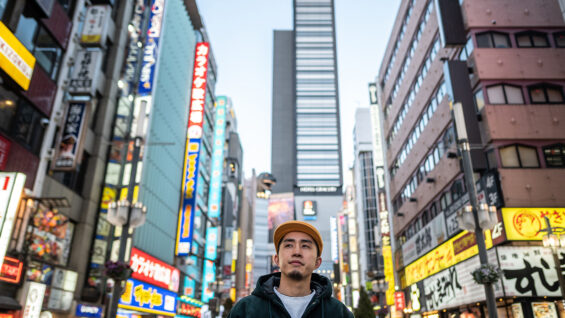


SUGAI KEN prioritizes “on-the-spot experience”
Sugai Ken’s music carries traces of an imagined Japan that words cannot fully capture. By layering geographical soundscapes, field recordings, and found sounds, the musician creates compositions that move with their own internal rhythm. Since his 2010 album ToKiShiNe, he has continued to push the boundaries of sound with each new release.
Tune in:
At the heart of the 2020 album Tone River lies the Tone River itself and its inhabitants, reshaped during Japan’s transformation into modernity by the engineering minds of the Dutch. Stretching over 322 kilometers, the river becomes both the backdrop and main character. Visiting three different points along its course, Sugai Ken captures sound using binaural and underwater microphones, creating an auditory scrapbook as well as an abstract meditation experience.

“For me, the ultimate happiness lies in enjoying sound as a phenomenon without being dictated by societal values or external judgments.”
As an artist who has long been involved in Japan’s underground music scene, how have you observed that scene through your travels around the world? Also, what do you think are the necessary conditions for innovative and bold work to emerge?
I started my activities as an artist in the mid-2000s. I am undoubtedly an underground artist, but I don’t really feel like I have significantly contributed to Japan’s underground scene.
Before 2010, Japan’s underground music scene was extremely diverse, avant-garde and vibrant. It was representative of Asia. I myself was deeply influenced by it during my formative years. However, due to factors such as Japan’s economic decline and aging population, the situation has changed. Now, I feel that underground music scenes in other Asian countries are leading the way in the region.
This is just my personal opinion (and not a criticism of the scene), but I believe that to create innovative and bold works, it is crucial not to be overly involved in the “scene.” Too much involvement can lead to rigid thinking, which is a potential obstacle to creativity.
You present a delicate and atmospheric sound design in an immersive experience that allows audiences to focus entirely in complete darkness. What do you first consider when setting up a live performance? What elements are essential for an ideal “Sugai Ken experience”?
The first thing I consider when setting up a live performance is whether there’s something I can do that is unique to that particular venue and location. Since I perform using a computer-based setup, I don’t have the same level of improvisation as instrumental players. However, I always make sure to introduce elements that make each performance feel one-of-a-kind for the audience.
Regarding the elements that shape my performances, I make a conscious effort not to disclose too much detail in advance. My live performances prioritize “on-the-spot experience” over “preconceived information”, so I always ensure that the audience never fully knows what to expect.
One of the downsides of the internet is “excessive sharing”. People today rely too much on web searches. My performances serve as a kind of resistance against this, an attempt to remind audiences of the value of experiencing things in the moment.
As a sound designer, I imagine that the way you perceive and interpret sound in everyday life is different from the average person. How does decontextualizing and reconstructing sounds in new contexts affect you? In other words, how do you feel that your unique artistic approach reflects on you as an individual?
I’m not sure if my perception of sound is different from others, but I do make a habit of listening to sounds carefully in my daily life. I utilized this skill in a public experimental exhibition I conducted last year at Kyushu University’s Special Acoustics Facility.
Furthermore, Ichiro Minawa, Japan’s legendary sound effects engineer, also emphasized the importance of everyday sound observation in his book. I feel that my artistic approach enriches my personal sensibility and life experiences like a perfect circle. (As a side note, the most striking artwork I have ever encountered in my life is Sesshū Tōyō’s Enso—a simple yet profound ink painting of a circle.)
For me, the ultimate happiness lies in enjoying sound as a phenomenon without being dictated by societal values or external judgments.
After releasing several solo albums, you’ve been focusing more on collaborations and remixes in recent years. What are your plans for future recordings? Are there any projects you’re particularly excited about?
I can’t reveal too much yet, but I have a project in the works that is based on a theme I’ve been developing for nearly a decade. It is deeply rooted in Japanese culture, but it is neither folk music nor festival-related. Nor is it part of the “Cool Japan” narrative -no geisha, samurai, or wabi-sabi (by the way, when written in kanji, 侘び寂び is extremely important!).
I can only hint that it is a theme that all Japanese people living in this archipelago cannot escape from.

Recommended journeys, spots, and road trips to take in TOKYO and JAPAN, by SUGAI KEN
In my personal experience, Japan is probably the world’s most food-rich country. Even convenience store food and fast food here are carefully crafted with delicate flavors and textures. So, how about a journey exploring Japan’s regional delicacies? This would allow you to experience the depth of Japan’s culinary culture firsthand.
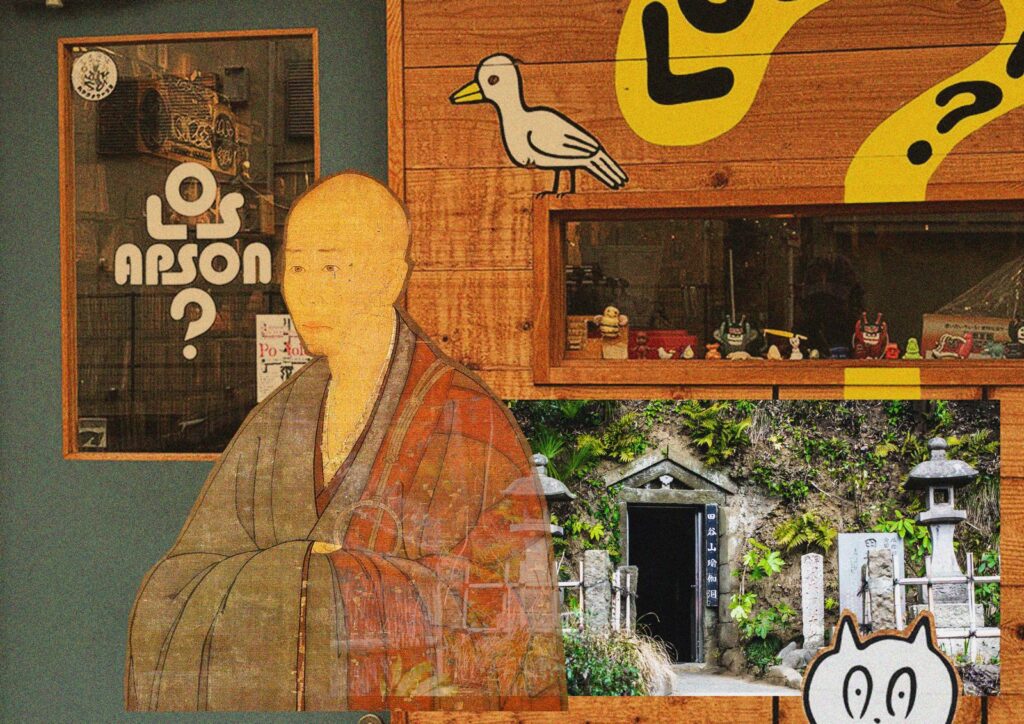
Other recommendations: Yakushima Island, Onnami Theater (Geisha Performance in Tokiwa, Niigata), Natural Brewed Miso, Kanaguya, a Historic Ryokan, Sumiyaki Restaurant Sawayaka (Famous Hamburg Steak), Kyushu University’s Acoustics Facility, Aburi Mochi Ichiwa (Kyoto), Record Kombini (Record Shop), Soi48 (Music Collective), Los Apson? (Record Shop), Taya Caves, Uji Koen (Japanese Tea Shop).
Something about TOKYO that remains a mystery to SUGAI KEN
(Although this is not limited to Tokyo) I cannot understand why the government is so eager to destroy charming historical streets through mindless gentrification, only to replace them with soulless commercial buildings and shallow luxury developments. When we travel abroad, aren’t we drawn to the deep history, warmth, and local character of a place rather than artificial “gentrified” tourist traps?
SUGAI KEN’s favorite late-night eating spot in TOKYO
In my youth, I often went to a beef bowl chain called Ranputei and frequently ordered their large beef bowl set. Other places that come to mind are: Matsuya, Fuji Soba, and Saizeriya. Rather than favorites, these were simply the only 24-hour options available late at night.
Another recommendation comes to mind suddenly: Forestlimit. It’s a space hosting exciting music events daily. Also, I highly recommend Gekikai Cola. If you visit Japan, please take the time to explore long-established local stores, humble supermarkets, and casual izakayas. That is where you’ll truly experience the real daily life of Japan.
TEENAGE KICKS: SUGAI KEN’s early influences in JAPAN
There are far too many to list, but off the top of my head:
Musō Soseki (Zen Master)
Ikkyū Sōjun (Zen Monk & Poet)
Yanagi Sōetsu (Founder of Mingei Movement)
Baisaō (18th Century Tea Master)
Sesshū Tōyō (Painter & Calligrapher)
Kusunoki Suzunari (Poet)
Iinuma Kazuo (Photographer)
Ryōtarō Shiba (Novelist)
Hayao Miyazaki (Filmmaker & Animator)
Masahiko Matsuoka (Editor & Philosopher)
Hiroyuki Sanada (Actor)