

Framing Tokyo in black-and-white: TAKEHIKO NAKAFUJI
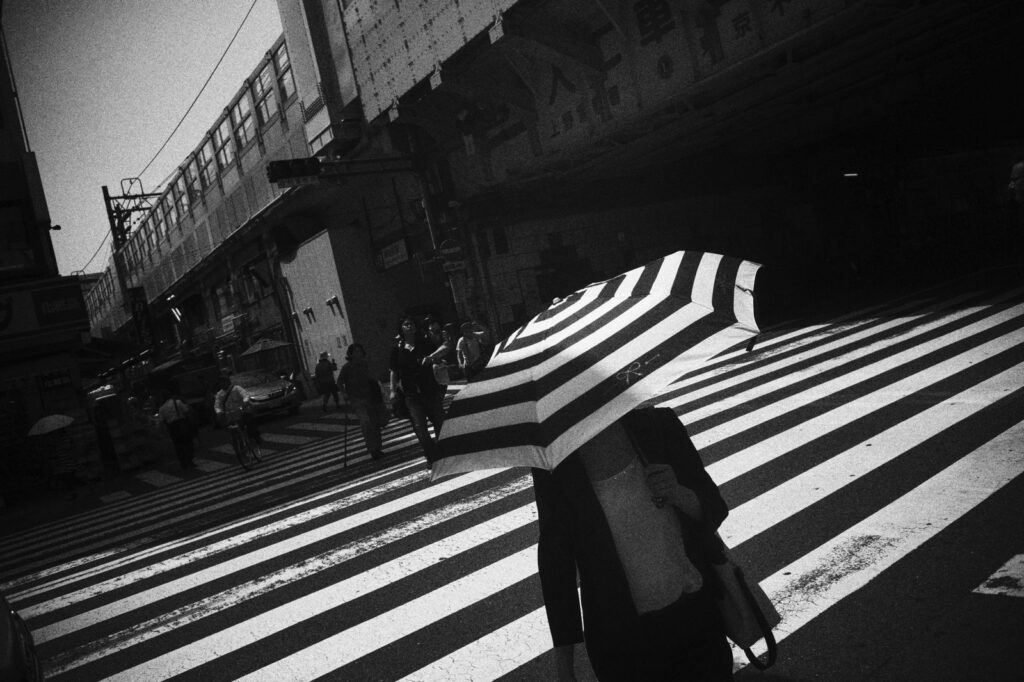
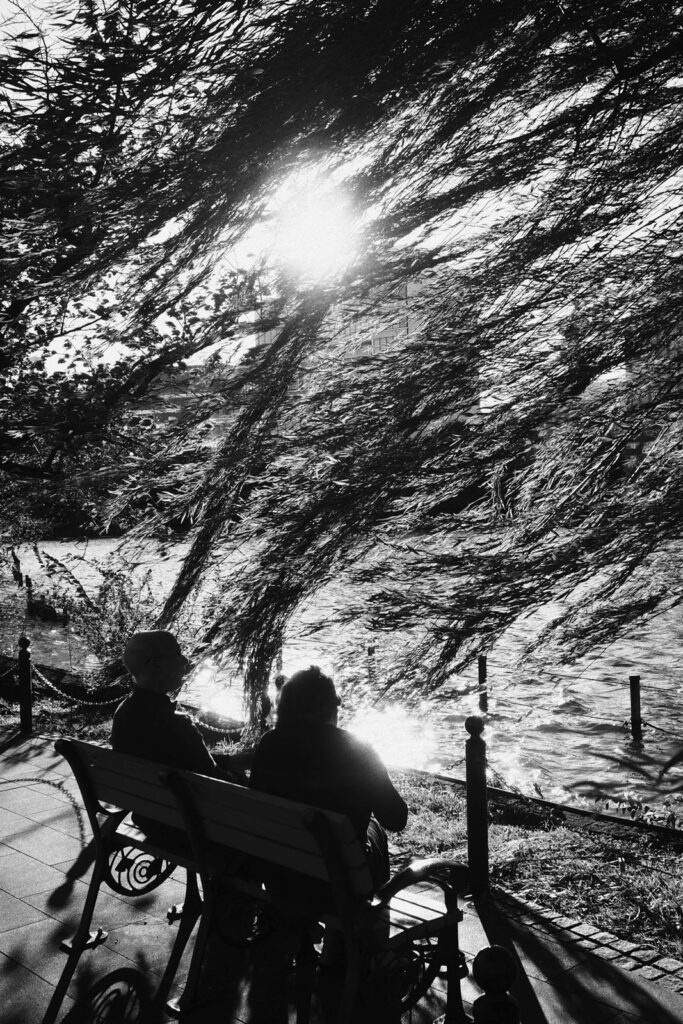
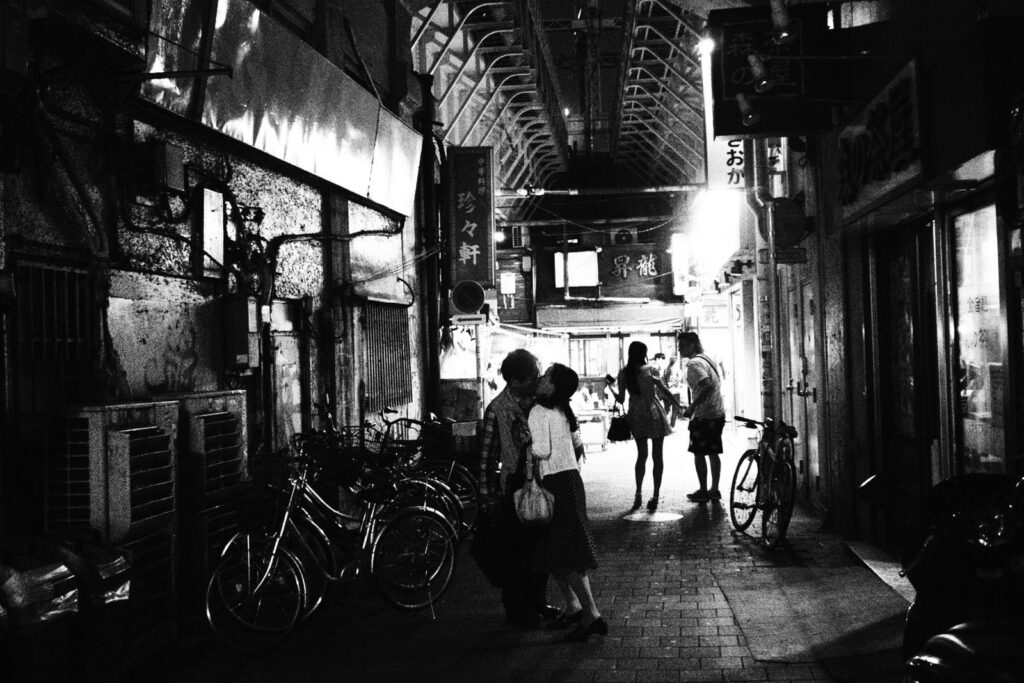
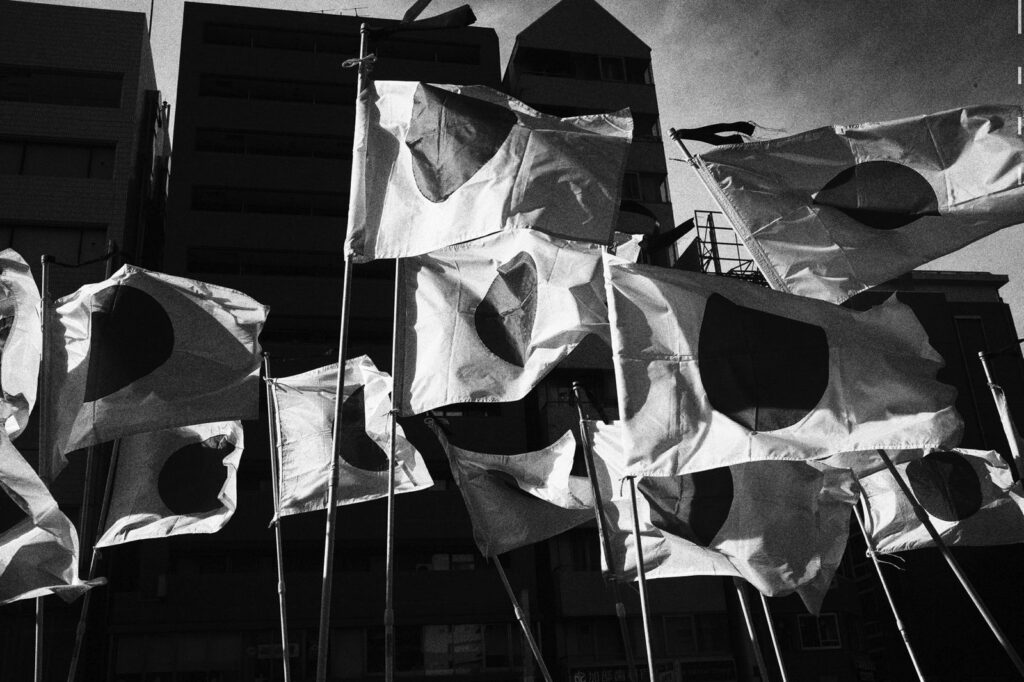
For over 30 years, Takehiko Nakafuji has chronicled Tokyo in grainy black-and-white, capturing both the raw toughness and the magnetic allure of urban life. His lens chases the soul of each neighborhood, compressing the city’s countless hues into shades of monochrome.
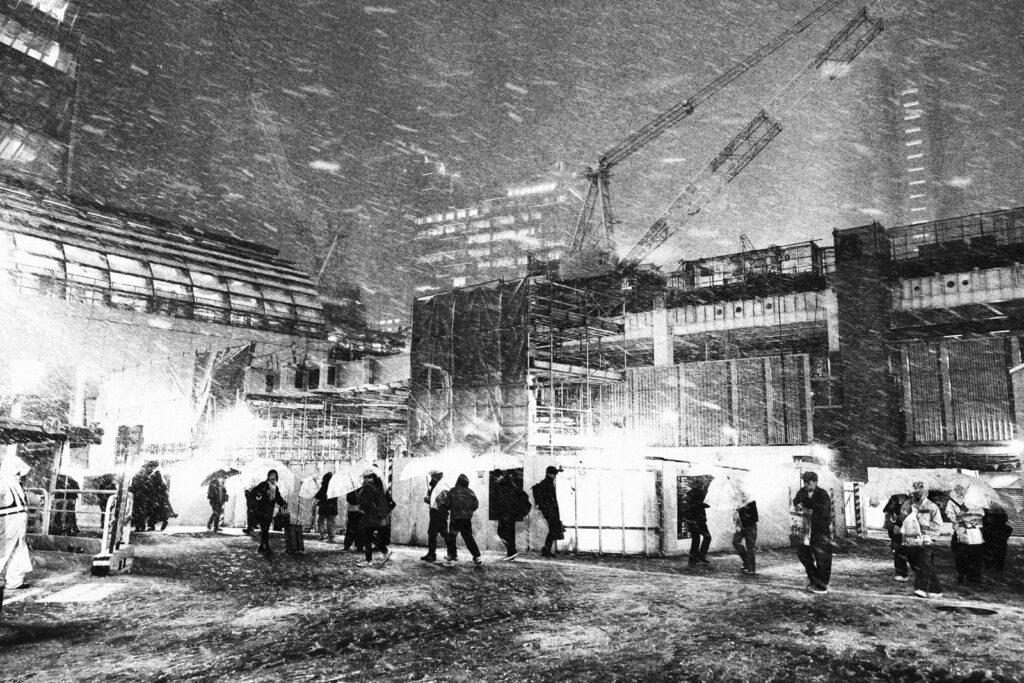
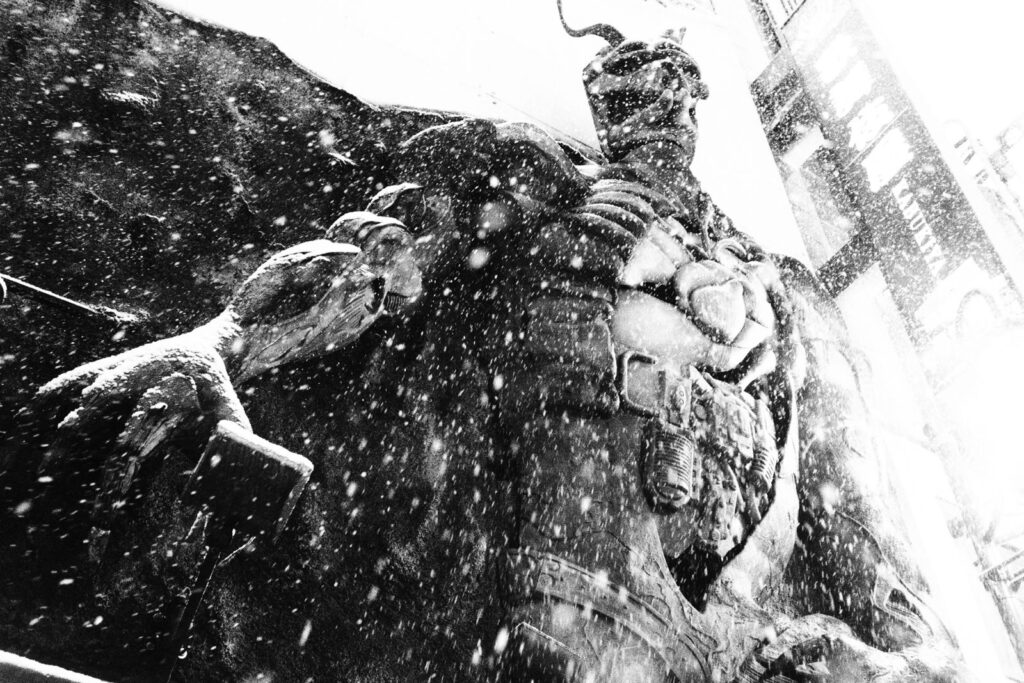
“Shooting in coarse-grained, high-contrast monochrome helps emphasize the city’s energetic and hard-edged image. Perhaps it makes Tokyo look even more intense than reality, but photography is not merely faithful documentation; it is also an art of constructing images.”
Your photographs reveal a deep dedication to black-and-white and strong contrast. How did your photography evolve into this style? What influenced the formation of your current approach?
The origin of my photography lies in taking pictures of punk rock musicians and their audiences at live shows I frequented as a high school student. From the very beginning, I shot in monochrome, largely influenced by the rough black-and-white images on punk rock record jackets and gig flyers.
At that time, I couldn’t develop the films myself, so I relied on shops, but the labs always gave me standard prints, which rarely matched the tones I wanted. When I joined the photography club in university, I learned about the darkroom techniques and gradually became able to produce the coarse-grained, high-contrast images I had envisioned.
Later, I discovered the work of photographer Daido Moriyama. His work impressed me deeply. I eventually dropped out of university to enroll in a vocational school where he taught, so I could study directly under him.
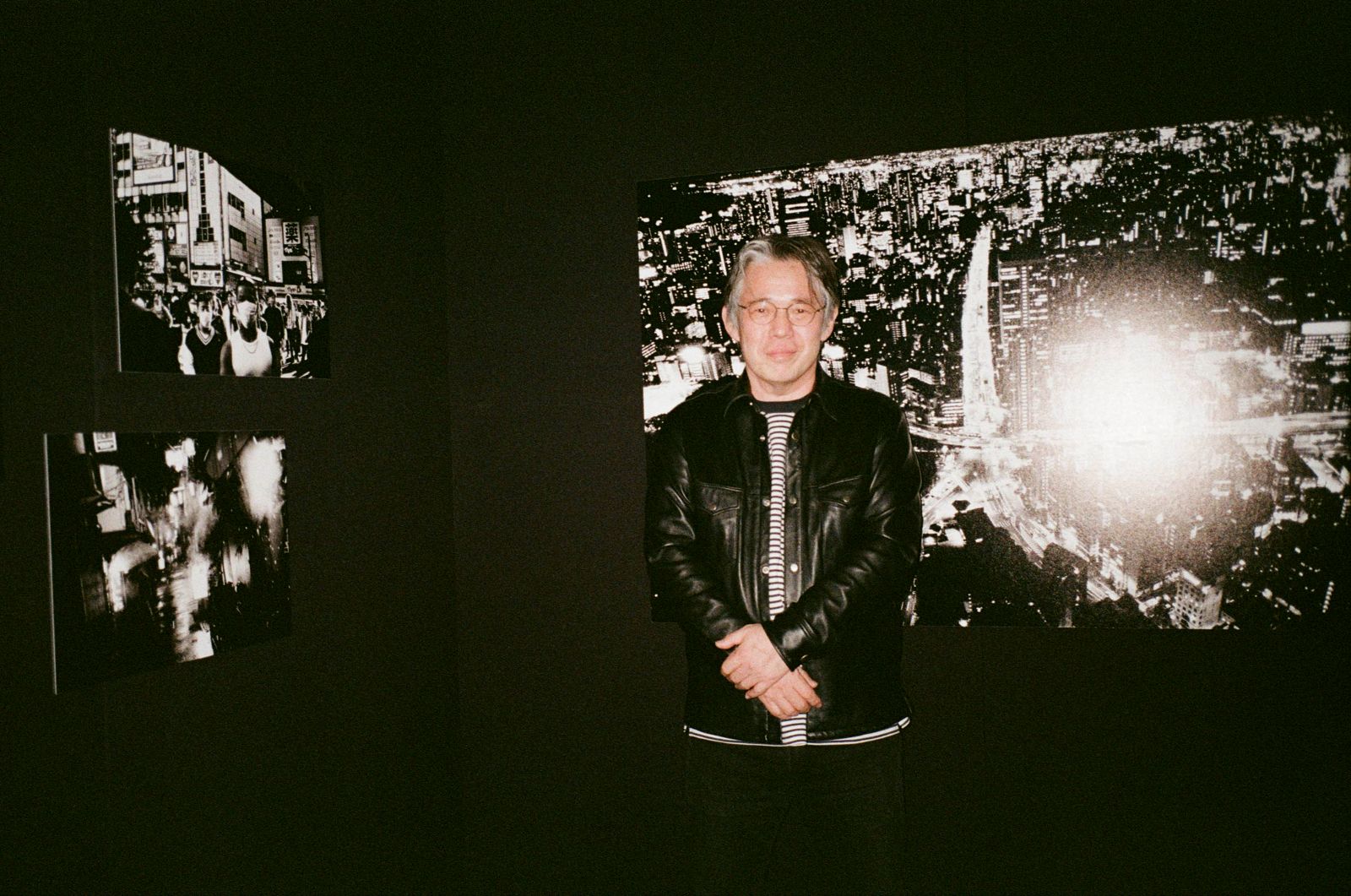
In your photography book and exhibition, Down on the Street: Tokyo 1995–2025, particularly focusing on street photography, we see a striking panorama of Tokyo spanning many years. Where do you believe the harmony between black-and-white photography and Tokyo itself lies?
Tokyo is an immense metropolis with a population of over 10 million, a city of countless elements that constantly shifts like an amoeba, an elusive creature that defies capture. Around the Imperial Palace you’ll find futuristic hubs like Shibuya and Shinjuku, but also traditional downtown neighborhoods like Ueno and Asakusa, not to mention shrines, temples, ports, factories, and sprawling residential areas. It’s nearly impossible for any single photographer to capture the whole picture. That’s why each photographer needs a unique approach to portraying Tokyo.
In my case, shooting in coarse-grained, high-contrast monochrome—honed through my punk rock photography—helps emphasize the city’s energetic and hard-edged image. Perhaps it makes Tokyo look even more intense than reality, but photography is not merely faithful documentation; it is also an art of constructing images. For conveying my impression of Tokyo, monochrome is the most effective means of expression.
Down on the Street: Tokyo 1995–2025 spans 30 years. In your view, how has Tokyo changed during this period?
Over these three decades, redevelopment upon redevelopment has erased many old streets and buildings, replacing them with inorganic clusters of massive skyscrapers. Many nostalgic scenes that I photographed no longer exist.
As someone born and raised in Tokyo, this is sad and regrettable, but at the same time, such constant transformation is also part of Tokyo’s unique identity. For over a hundred years, the city has been repeatedly destroyed and rebuilt: from the Great Kanto Earthquake to wartime bombings, from the bubble-era (1986-1991) land grabs to modern redevelopment.
In recent years, globalization has also advanced, with many foreigners now living in or visiting Tokyo. For a photographer, this internationalization provides exciting subjects.
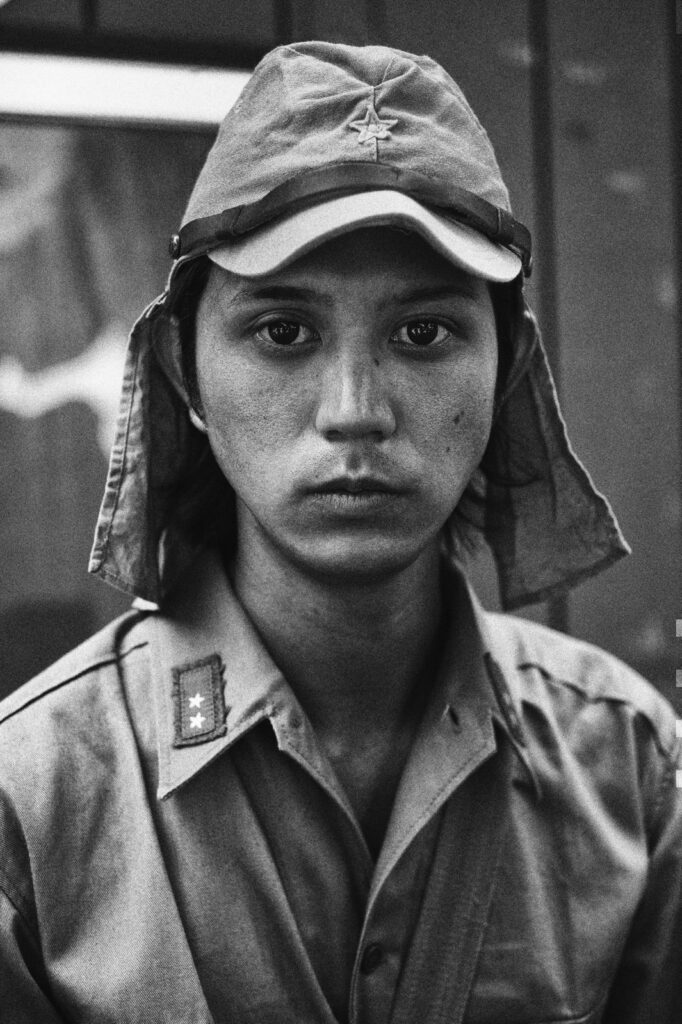
As a street photographer, how do people generally react while you are capturing ‘the moment’? What approach do you take when photographing people—do you interact with them first, or do you prefer to capture them candidly?
It depends on the situation; I adapt flexibly case by case. When I come across someone with a particularly striking appearance, I sometimes approach them for permission and take a street-portrait-style photo. But in principle, I prefer candid shots of people in their natural state.
Often, they don’t notice being photographed, but if they do, I’ll acknowledge them with a nod or a thank you. Nowadays, it’s common to connect through social media and share the photo afterwards. I’ve been photographing for many years, yet I’ve never experienced any major trouble.
While shooting in the city, what impulses or kinds of moments make you reach for your camera?
The same city looks entirely different depending on weather and light. For example, on a snowy day, Tokyo suddenly resembles a northern city, so I always head out with my camera.
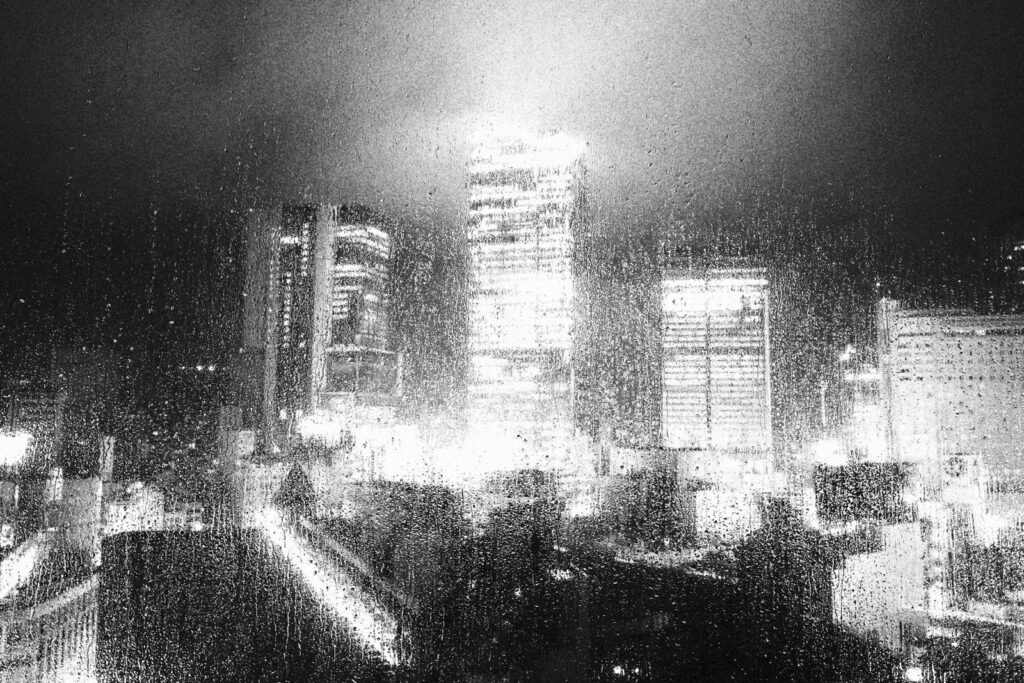
I’m also drawn to those magical times when light transforms the city. Streets bathed in the golden glow of the setting sun, or neon reflections shimmering on rainy nights.
Urban space is a central theme in your photography. From that perspective, which city abroad is your favorite to photograph? Which city stimulates your creativity the most?
Tokyo is my hometown, so naturally I feel a strong attachment to it. But abroad, I love Paris and have even published two photo books devoted entirely to the city. Paris is of course a beautiful city with a long history, but beneath the surface lies a deep darkness as well. It’s this duality that gives Paris its inexhaustible allure.

Some spots in TOKYO that TAKEHIKO NAKAFUJI visited as a teenager, and still does
Shinjuku’s Golden Gai, Lion café in Shibuya, Neruken café in Koenji, and the secondhand bookstore district of Jimbocho. Golden Gai has bars like Kodoji and Nagune that attract many photographers. Lion and Neruken are among Tokyo’s oldest cafés, with a wonderful atmosphere for relaxation. And in Jimbocho, you can find excellent art and photo books at places like Komiyama Bookstore and Genkido.
TAKEHIKO NAKAFUJI’s favorite late night eating spots
Strictly speaking, not so much late-night, but I love long-established yo-shoku (Western-style Japanese) and curry restaurants like Hayashiya and Akashiya in Shinjuku, Takase in Ikebukuro, Murugi in Shibuya, and Kyoeido in Jimbocho. Akashiya’s rolled cabbage stew, Murugi’s curry, and Kyoeido’s curry are exceptional.
Yoshoku and curry are Western dishes that evolved uniquely in Japan. I consider them the soul food of Tokyo, a city that has long embodied modernity.
Spots in TOKYO that are usually overlooked by travellers, but shouldn’t, according to TAKEHIKO NAKAFUJI
The photography gallery district stretching from Yotsuya to Shinjuku Sanchome. Small galleries run by photographers themselves—such as Gallery Niepce, Totem Pole Photo Gallery, Place M, Yocto, and Third District Gallery—are scattered throughout the area. These are sites of truly exciting photographic expression.
One thing that TAKEHIKO NAKAFUJI would wish to change in TOKYO
It’s impossible, but I wish I could bring back the old streetscapes that have already vanished.