

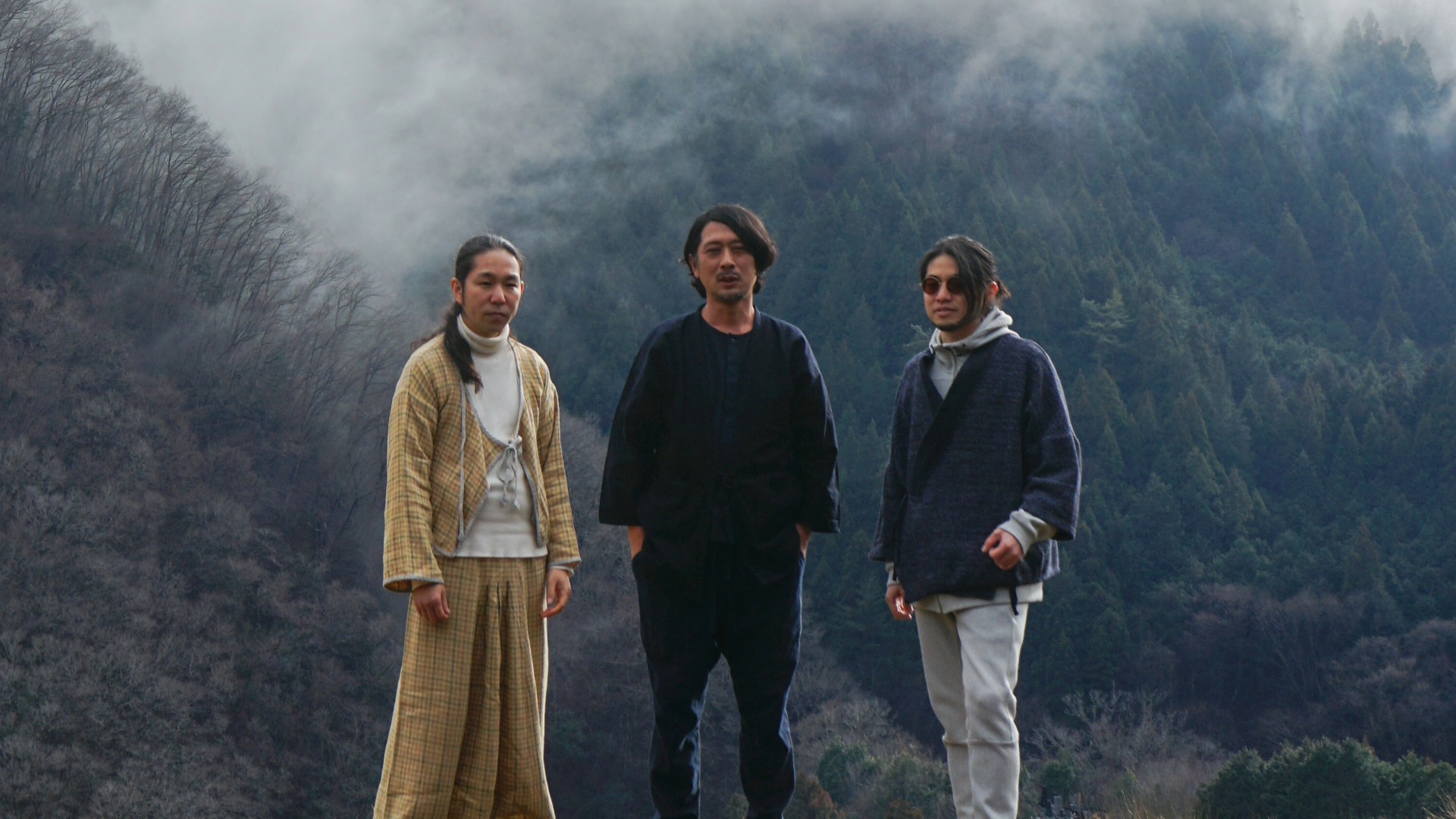
To welcome whatever comes their way: KUFUKI
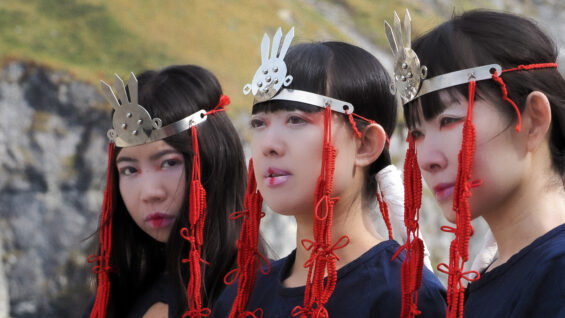
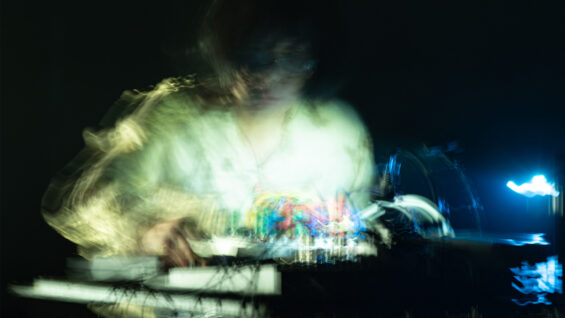
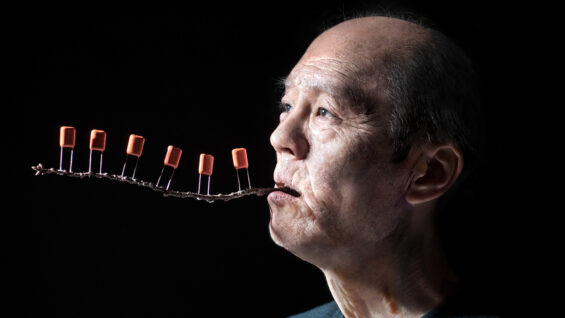
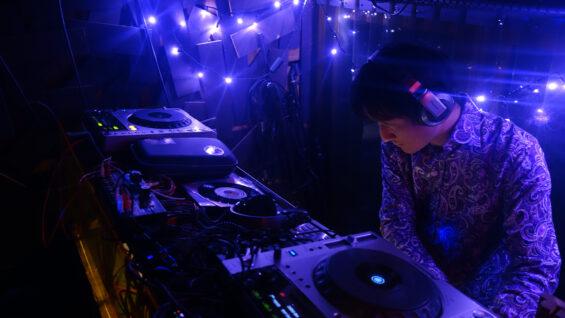
Tokyo-based trio Kufuki explore a wide range of sound sources when working together, at times shaping them through strikingly deconstructive approaches. Encountering one of their head-spinning live performances—each one shifting according to the space, atmosphere, and moment—is often enough to turn listeners into lifelong Kufuki fans. They move fluidly between groove-driven dance tracks and hypnotic, heavily repetitive psychedelic excursions. Their sound brings together Japan’s traditional sensibilities with contemporary electronic dance music in an eclectic synthesis. An album recorded with J. Hakan Dedeoğlu’s solo project TSU! is also scheduled for release in 2026.

Tune in:
Kufuki’s Dodome EP (2018) brings together three traditional Japanese folk songs with contemporary beat structures. The tracks “Torobayashi,” “Gentakabushi,” and “Akusekijima” draw from the min’yō repertoire, while the closing dub version revisits the source material and their inspirations from a different perspective. It’s also worth noting that “Akusekijima” has become one of the high points of Kufuki’s live performances.
“When the music develops into something that makes all of us burst out laughing, that’s when the track is finished.”
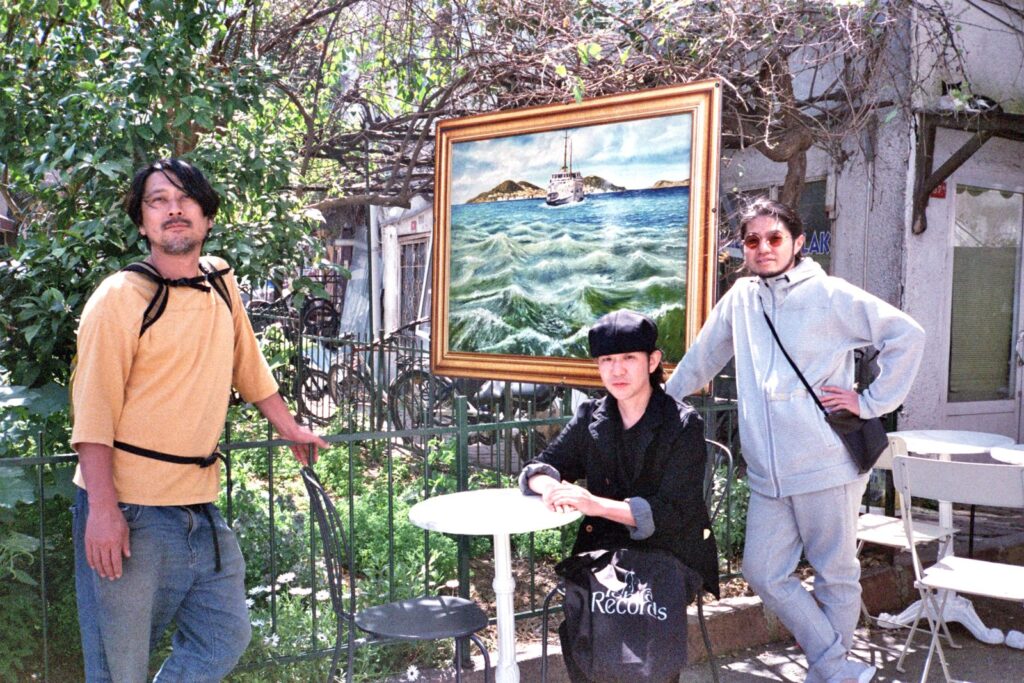
Kufuki’s music is shaped by very distinctive elements. Both the musical traditions of your country and futuristic sound designs / patterns are part of this equation. What do you think is the essence that makes Kufuki what it is?
Being honest with ourselves. Just as every person has individuality, music becomes unique when you are true to yourself. We are drawn both to our roots and to futuristic things.
How does your creative process take shape as a group? In what kind of environment do your songs come to life?
Most of the time, it starts with someone suggesting a release. And usually, the ideas strike us a little after the deadline has already passed! Then we begin a session, and when the music develops into something that makes all of us burst out laughing, that’s when the track is finished.
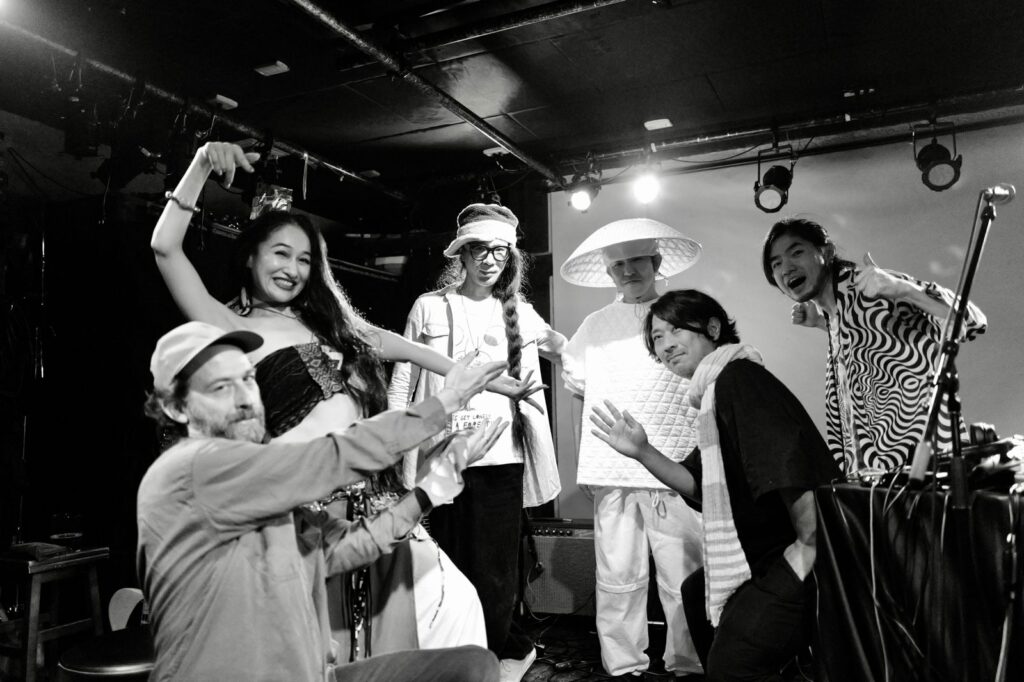
Photography by Aylin Güngör
No matter the venue, Kufuki’s music instantly transforms the space when performed live. How do you approach live performance? What types of places do you most enjoy playing in?
We have several styles of performance and choose depending on the venue or event. Outdoors in the daytime, we play something that lets everyone dance comfortably, while in late-night spots filled with music lovers, we dive deep into improvisation. But in any situation, being true to ourselves is important.
We especially like playing in alternative spaces filled with love for music. Places that are not exactly live music venues and not exactly clubs, but something in between. Somewhere loud, intimate, and passionate about music. Spaces like Forest Limit, or the former SuperDeluxe in Nishi-Azabu.
What does “dance music” evoke in you? In the case of Kufuki, how much of your motivation is about getting people to move?
In our case, we often start with a non-beat piece and make people who want to dance wait for about 30 minutes. Then, after 30 minutes, we finally drop the kick. At that point, people who can’t hold back anymore dance like crazy. We like dance music, but that itself is not the main motivation of our live sets. Most of our songs are made in a way that people who want to dance can dance and those who don’t want to don’t have to.
You recently recorded a new album with TSU!. When collaborating with another musician, what do you prioritize? What other kinds of music or sounds would you like the Kufuki to intersect with?
Recording with J. Hakan Dedeoğlu was truly inspiring and exciting. We feel like we created a really great album. What we prioritize above all is respecting each other and respecting the culture, roots, and techniques that the other person brings, while considering what we can contribute from our side.
Looking ahead, we’d love to intersect with people from different cultures but also with non-human beings like animals, plants, and even the stars. Our stance is basically to welcome whatever comes our way.
What’s next for Kufuki? Can you give us some clues about upcoming projects on your side?
We’re planning to release recordings of our regular sessions as digital releases. The content will be underground and experimental. At the same time, we’d like to create pure synthesizer music that anyone could find pleasant—music of an imaginary culture with a laid-back groove, something that wouldn’t feel out of place in a resort setting. It’s hard to put into words, but perhaps the “touristic music” Haruomi Hosono was making in the mid-80s could be a hint.

A scent distinctive to TOKYO according to KUFUKI
The chaotic mixture of ramen, yakitori, sewage, garbage, burnt brake pads, cherry blossoms… It feels like the desires of the Japanese people gathering and competing in Tokyo are embodied in those smells.
A recommended day trip outside of TOKYO by KUFUKI
Kawarage Oyutaki in Akita is a wild hot spring waterfall in nature.
The sense of people being considerate of each other in the residential areas of Kyoto.
Riverbanks, which are full of strange and mysterious structures.
TEENAGE KICKS: KUFUKI’s early influences in JAPAN
Yoshiharu Tsuge, Takashi Yanase, Taro Okamoto, Haruomi Hosono, Eiichi Ohtaki, Atsuki Kimura, Isao Tomita, Motojirō Kajii, Osamu Dazai, Yukio Mishima, Ryusuke Hamaguchi, Yasujiro Ozu, Hayao Miyazaki.
Recommended music venues in TOKYO, by KUFUKI
Shelter (Hachioji), Hoipoi (Koenji), Forest Limit (Hatagaya).